

Gopher Control Service in Albany, NY —
Removal & Extermination
Gopher activity can damage lawns, gardens, and landscaped areas if left untreated. Our Gopher Control Service in Albany, NY provides safe and effective solutions to identify active burrows, remove gophers, and help prevent future infestations. We serve homeowners and businesses throughout Albany with reliable, customized pest control services designed to protect your property and restore your outdoor spaces.
Gopher Removal and Extermination Service for Albany, NY
If you've found a fresh mound of loose soil on your lawn near Washington Park, the Pine Bush, or your backyard off New Scotland Avenue, you're probably dealing with a pocket gopher, not a mole. Albany's sandy, well-drained soil — a leftover from the old glacial lake bed that once covered this entire region — happens to be exactly the kind of ground gophers prefer to dig in. We're a local exterminator team that handles gopher removal across Albany's neighborhoods, from the Pine Bush-adjacent properties out west to the older clay-soil lots closer to downtown. Whether it's one mound in the side yard or a tunnel network spreading under your lawn, we inspect, trap, and remove the problem at the source.
Signs of Gopher in House (and Yard)
Gophers rarely get inside a house the way mice or squirrels do, but they leave plenty of evidence outdoors that homeowners mistake for other pests. Here's what to look for:
Distinct Dirt Mounds
Fan-shaped or crescent-shaped piles of loose soil, usually with a plugged hole off to one side, not in the center like a mole mound.
Damaged Vegetation
Wilting plants, vegetable gardens with roots chewed clean through, or entire flower beds that seem to collapse overnight as roots are pulled down from below.
Utility Damage
Chewed irrigation lines, gnawed low-voltage landscape wiring, or sprinkler heads that suddenly stop working.
Soft Spots in the Lawn
Areas that give way underfoot, indicating a shallow tunnel just beneath the surface.
Sightings
A stocky, brown rodent with small eyes and large front teeth, usually seen briefly at a burrow entrance before it disappears.
What's Included in Albany Gopher Control & Removal Process
House & Lawn Inspection
We walk the property, map active burrow systems versus old abandoned ones, and check soil type and drainage patterns, since gophers behave differently in Albany's sandy Pine Bush soil than they do in the heavier clay closer to the river.
Trapping & Removal
Live or lethal traps are placed at verified active tunnels based on what's appropriate for your property and local regulations.
Follow-up
We return to check trap activity, confirm the burrow system is no longer occupied, and make adjustments if gophers have shifted to a new section of the yard.
Guidance
Before we leave, we walk you through what attracted gophers to your property in the first place and what changes will make it less appealing to the next one.
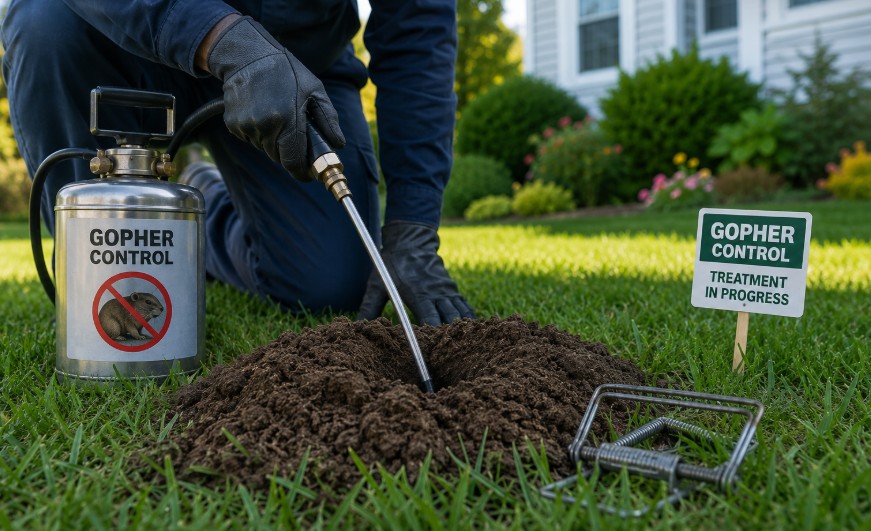
Methods & Tools for Gopher Control
Probing for burrows
Using a probe rod to locate the main tunnel system before any trap or treatment goes in, since guessing wrong wastes time and lets the gopher dig a new mound elsewhere.
Trapping
The most reliable method for confirmed removal, placed directly in active runways.
Habitat modification
Adjusting watering schedules, vegetation, and ground cover that make a yard attractive to gophers in the first place.
Baiting
Used selectively and only where appropriate, with attention to pets and nearby wildlife.
Fumigation
Applied to active burrow systems in situations where trapping alone isn't practical.
Exclusion
Installing underground wire barriers around garden beds or high-value landscaping to physically block tunneling.
Proofing
Ongoing measures, like buried mesh around raised beds or tree roots, to keep a cleared property from being reinvaded.
Case Studies: Gopher Removal in Albany, NY
Pine Hills lawn, multiple active mounds
A homeowner near Pine Hills noticed three new mounds appear over a single weekend, with a garden bed showing signs of root damage. Probing revealed an active tunnel system running along the property line, likely connected to undeveloped land nearby. We set traps at two confirmed entry points, removed two gophers over the following week, and followed up ten days later to confirm no new mounds had formed. The owner added gopher wire under a newly planted vegetable bed as a preventive step.
Delmar-border property, irrigation damage
A property near the Albany-Delmar line had repeated irrigation failures that the homeowner initially blamed on a faulty sprinkler system. Inspection found a gopher tunnel running directly beneath the irrigation line, with chew marks on the buried tubing. We trapped the burrow system, repaired the immediate area in coordination with the homeowner's landscaper, and recommended a check of any other underground lines on the property before replanting.
Cost of Gopher Removal in Albany
Gopher removal costs in Albany typically depend on the size of the property, how many active burrow systems are present, and which methods are needed. A single mound with one confirmed tunnel system is generally less involved — and less costly — than a property with multiple active burrows or extensive lawn damage. We provide a free estimate after the initial inspection, once we know exactly what we're dealing with, so you're not paying for guesswork.
Why Choose Albany Rodent Control Team
We're local, we know Albany's terrain, and we treat gophers the way the local ground actually demands. The sandy, glacial-lake-bed soil that runs through much of the city drains fast and digs easy, which is part of why gophers settle into Albany lawns so readily — and why a generic, one-size-fits-all approach often misses the mark. We back our gopher control work with:
- 24/7 availability for urgent situations
- Free estimates before any work begins
- A service guarantee on completed removal work
Serving Albany Neighborhoods and Surrounding Cities
We provide gopher control and removal throughout Albany, including:
Albany Neighborhoods:
Pine Hills, Buckingham Lake, Delaware Avenue, Helderberg, New Scotland Avenue corridor, Center Square, Washington Park area, Krumkill, Whitehall, and the Albany Pine Bush border neighborhoods.
Surrounding Communities:
Delmar, Guilderland, Colonie, Slingerlands, Loudonville, Latham, and Rensselaer.
Don't see your area listed? Reach out — we likely still service your property.
Frequently Asked Questions
Is it a gopher or a mole in my yard?
Mound shape is the easiest way to tell. Gopher mounds are fan- or crescent-shaped with a visible plug off-center; mole mounds are more conical and centered over the hole. Gophers also damage plant roots and vegetable gardens directly, since they eat vegetation, while moles are after grubs and earthworms and tend to leave plants alone.
Why does Albany seem to have so many gopher problems in certain neighborhoods?
A lot of it comes down to soil. Areas built on the old sandy lake-bed and Pine Bush-adjacent ground are easier for gophers to tunnel through than the denser clay soil found closer to downtown and the river, so lawns in those sandier areas tend to see more activity.
Will gopher damage come back if I don't deal with the whole burrow system?
It often does. Gopher tunnel systems can run much farther than the visible mounds suggest, and a single missed entrance can mean the same animal — or a new one using the existing tunnels — is back within a few weeks. That's why probing the full system matters more than just filling in mounds.
Is it safe to fill in gopher mounds myself before calling someone?
You can flatten the mound for mowing purposes, but filling in or collapsing the tunnel itself usually just causes the gopher to dig a new exit nearby, which can make it harder to locate the active tunnel later. It's better to leave the burrow structure intact until inspection.
Can gophers damage my home's foundation or underground utility lines?
Gophers generally stay in lawn and garden soil rather than digging near foundations, but they will chew through irrigation lines, buried low-voltage wiring, and plant roots that cross their tunnel paths. Utility damage is one of the more overlooked signs of an active infestation.
