
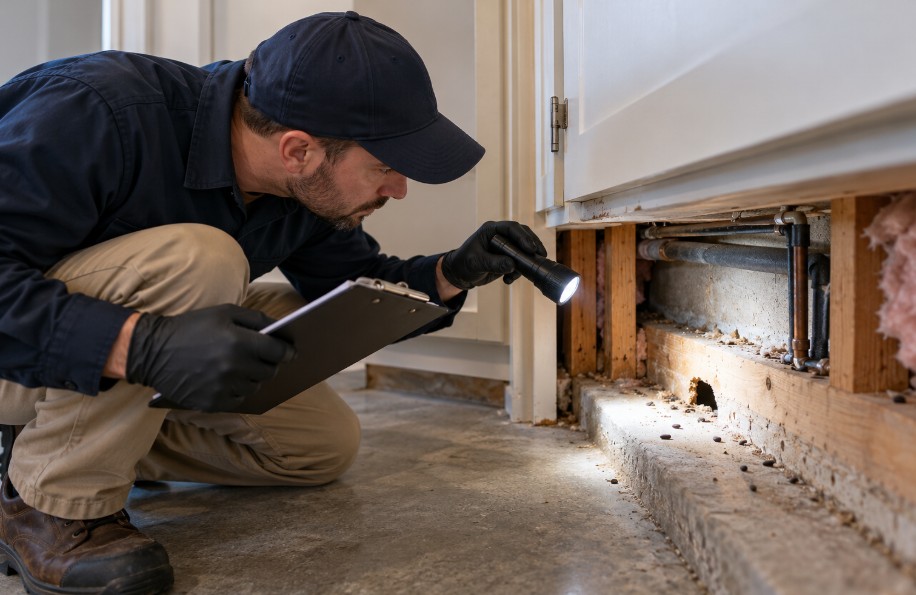
Rodent Inspection in Albany, NY
Before anyone sets a trap, find out what you have, how it got in and how far it has spread. We inspect Albany homes and buildings from the cellar floor to the roofline and put what we find in writing.
You found droppings behind the stove. Or something is scratching inside the wall at night. Or you are about to buy a 1920s two-family off Delaware Avenue and want to know what is living in it before you close.
The first step is the same every time: a proper look.
Traps set before those are answered usually catch a few mice and leave the problem exactly where it was.
Why Professional Rodent Assessment Is Essential

In most cities a mouse problem is a kitchen problem. In Albany it is a building problem, and four local conditions are the reason.
Old buildings with a lot of ways in
A large share of the city's housing went up before 1940, and whole blocks of Center Square, the Mansion District and Arbor Hill date from the 1800s. Stone foundations, soft mortar, coal chutes, cellar windows and a century of utility holes add up. A mouse needs a gap about the width of a pencil. An old Albany house has dozens, and most of them are below the sill line where nobody looks.
A sewer system older than many of the houses
The city's own figures describe about 900 miles of sewer pipe, parts of it more than 100 years old, with wastewater and stormwater sharing the same lines. The old Beaver Creek, for one, now runs as a trunk sewer beneath Lincoln Park. Norway rats live in and travel through sewers. That is why a rat can turn up on a quiet block with no obvious food source, and why we check floor drains and old sewer connections in every cellar.
Winters that push everything indoors
An average January night in Albany is about 16°F. Mice start testing houses when the nights cool in September and move in around the first frost in October. By the time most people hear them, they have been inside for weeks.
Shared walls and shared cellars
Rowhouses, two-families and converted flats share walls, cellars and trash areas. A mouse problem in one unit is rarely limited to that unit, and an inspection that stops at your own door misses half the picture.
Early detection. Mice breed fast. A couple of mice in October can be a full infestation by the end of winter.
The right animal. House mice, native field mice and Norway rats behave differently and need different traps, placement and sealing.
The way in. Removal without finding the entry points only empties the house until the next ones arrive.
Safety and sanitation. We flag contaminated food storage, insulation and surfaces, and tell you what needs proper cleanup.
Peace of mind. A clean inspection is worth having too, especially before winter or before you sign for a house.
Signs You Should Schedule an Inspection
Book an inspection as soon as you notice any of these.
Scratching or scurrying in walls or ceilings, usually after the house goes quiet
Droppings in cabinets, drawers, the pantry or along the cellar walls
Chewed food packaging, wiring or door corners
A musty, ammonia-like smell in a closed cabinet or the cellar
Greasy smudges along baseboards or around pipe holes
Shredded paper, fabric or insulation tucked into a corner
Pets fixed on one spot of the wall, floor or stove
A burrow hole along the foundation, under the stoop or beside the shed
A mouse or rat seen in daylight
Some good reasons to book have nothing to do with seeing a mouse:
You are buying a house. Especially an older one, a two-family, or one that has sat empty.
You own a rental. Before a city rental inspection, or at turnover between tenants.
A building next door is vacant, being renovated or coming down. Construction displaces rats and sends them to the nearest standing building.
It is late summer. August and September are the best weeks to find and close gaps, before the first frost sends mice indoors.
You run a food business. A written inspection on file is useful before the health inspector visits.
You already tried traps or bait. If activity keeps coming back, the entry point was never found.
Our Rodent Inspection in Albany
We work the building in a fixed order, low to high and outside to inside, so nothing gets skipped. Rodents prefer dark, protected places, so the inspection goes under appliances and behind stairs as well as up into drop ceilings and along the tops of pipes.
Outside the building
- The foundation, all the way around, including the stretch behind the shrubs
- The sill line where the wood frame sits on the masonry
- Cellar windows, areaways, bulkhead doors and old coal chute openings
- Every pipe, wire, cable, gas and oil line that passes through the wall
- Porch skirting, steps and stoops, and what is dug in underneath them
- Garage doors, door sweeps and thresholds
- Dryer, bath-fan and foundation vents
- Trash and recycling storage, compost, bird feeders and firewood
- Burrows along the foundation, fences, sheds and retaining walls
- The roofline, by ladder where the ground view is not enough
Cellar, basement and crawl space
- The top of the foundation wall and the sill plate, end to end
- Mortar joints in stone and brick foundations
- Floor drains, sump pits, sewer cleanouts and capped-off old sewer lines
- The boiler or furnace area and the pipes that rise from it
- Party walls and shared cellars in rowhouses and two-families
- Behind and under the cellar stairs
- Stored boxes, shelving and anything kept on the floor
- Any crawl space, including the vents and the access hatch
Kitchen, pantry and living floors
- Under and behind the stove and refrigerator
- The sink cabinet and the holes where the pipes come through
- Cabinet bases and toe kicks
- Pantry shelves, pet food and the back corners of closets
- Radiator and heating pipe holes in the floors, a standard mouse route in older Albany houses
- Drop ceilings and laundry areas
Attic and upper floors
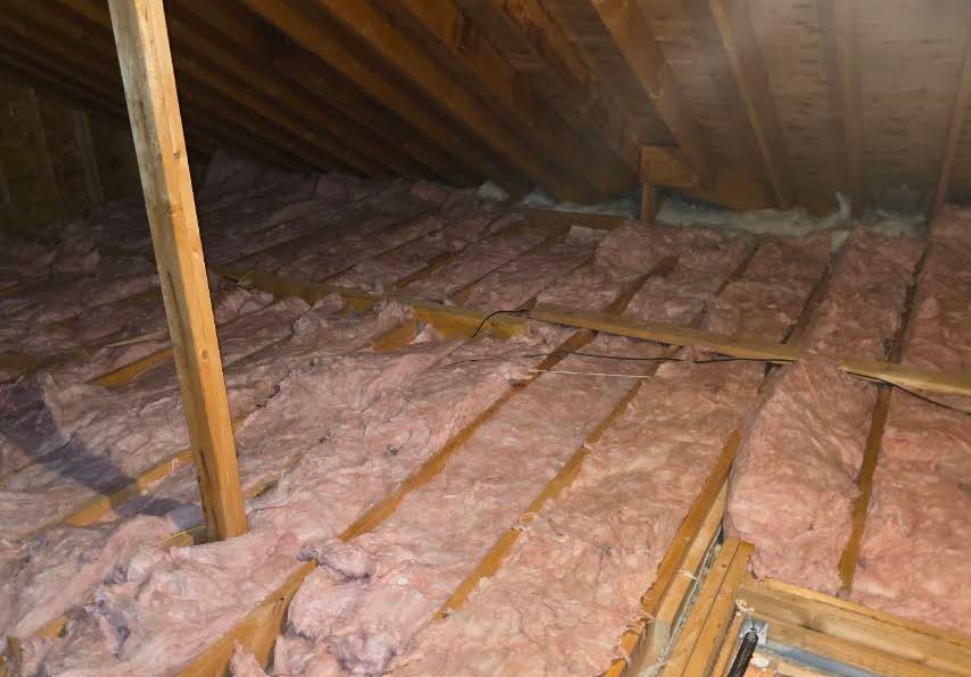
- Runways and nests in the insulation
- Eaves, knee walls and the tops of the wall cavities
- Daylight at vents, soffits and chimneys
- Wiring and ductwork for chewing
Garage, porch and outbuildings
- The wall between an attached garage and the house
- Enclosed porches and the space below them
- Sheds, especially those sitting directly on the ground
What we look for, and what it tells us
Finding droppings is the easy part. Reading them is the inspection.
| Sign | What we check | What it tells us |
|---|---|---|
| Droppings | Size, shape, color, how many and where | Rice-sized with pointed ends means mice. Blunt capsules around three-quarters of an inch mean Norway rats. Dark and soft is recent; gray and crumbly is old. |
| Mixed dropping sizes | Large and very small droppings in the same spot | Adults and juveniles together, which means they are breeding inside the building |
| Rub marks | Oily brown smudges along sills, joists, pipes and hole edges | An established route used night after night, and the best place to put a trap |
| Gnaw marks | Tooth-mark width, and whether the wood is pale or darkened | Mouse or rat, and whether the damage is fresh |
| Tracks | Footprints and tail drags in cellar dust | Direction of travel between nest, food and entry point |
| Nests | Shredded paper, fabric and insulation in protected corners | Where they are living, which is usually within a short run of where they are feeding |
| Burrows | Holes a few inches across with smooth edges and loose soil fanned out | Norway rats living outside and working toward the foundation |
| Urine and odor | Staining, a sharp ammonia smell, glow under ultraviolet light | How heavy and how long-running the activity is |
| Food damage | Chewed bags and boxes, cached seed or pet food | What is feeding them, which has to change for any fix to hold |
A pile of droppings looks alarming, but numbers alone can mislead. One mouse leaves 50 to 60 droppings a day and one rat 40 to 50. What matters more is age, spread and whether there are young.
Not every finding is a mouse or a rat
Part of the job is ruling things out.
Fast, heavy running overhead in daylight is almost always a gray squirrel.
Slow, heavy footsteps at night and tipped trash cans point to a raccoon.
Raised ridges and soft tunnels across the lawn are moles or voles, not rats.
Seed caches and mice with white bellies near the Pine Bush, the Normanskill or wooded lots are native field mice coming in from outside. They call for sealing at the roofline and foundation more than trapping in the kitchen.
We tell you which animal we think it is and what we saw that says so.
Where we look first, by Albany house type
Albany was built in waves, and each wave lets rodents in a different way. We inspect the whole building every time, but the age of the house tells us where to start.
| Building | Typical neighborhoods | Where we look first |
|---|---|---|
| Brick and brownstone rowhouses | Center Square, Hudson/Park, Mansion District, Arbor Hill, the Pastures | Stone foundations with washed-out mortar, coal chutes, areaway drains, the party wall and any cellar shared with the neighbor |
| Frame two-families and flats | Pine Hills, Delaware Avenue, Helderberg, Melrose, Park South | Porch skirting, cellar windows, the sill, open wall cavities that run from cellar to attic, and heating pipe holes |
| Postwar capes and ranches | Buckingham Lake, Crestwood, New Scotland, Whitehall | Corners of block foundations, the garage door seal, the garage-to-house wall and pipe holes through the slab |
| Later subdivisions, townhouses and apartment complexes | Upper Washington Avenue, the Pine Bush edge, Normanskill | Soffit and gable vents, dryer vents, the gap behind the gutters and shared attic or utility spaces |
| Converted and commercial buildings | Warehouse District, North Albany, downtown, Lark Street | Utility chases between floors, drop ceilings, floor drains, loading doors and the dumpster area |
Two local patterns come up often enough to mention. In Pine Hills and the campus area, rental turnover in May and late August puts extra food waste at the curb, and mouse calls follow a few weeks later. In Arbor Hill, West Hill and the South End, an occupied house beside a vacant one needs the shared wall inspected as carefully as the outside walls.
How we inspect
A rodent inspection is non-invasive. We do not cut into walls, and you do not need to leave the house.
Most of the work is a strong light, a mirror on a pole, and getting down to floor level.
Rodent urine glows under UV, which shows routes that are invisible in normal light.
For soffits, vents and roof edges that cannot be judged from the ground.
Every entry point and every piece of evidence is photographed, so you see what we saw.
We can set out monitoring blocks that contain no poison, only a marker that makes droppings glow under UV. Glowing droppings indoors after blocks were placed outside prove there is an open way in. Glowing droppings upstairs after blocks were placed in the cellar show the route between floors.
No traps are set and no bait is placed during an inspection unless you ask us to start work the same day.
A typical single-family house takes 30 to 60 minutes. Two-families, rowhouses with shared cellars and commercial buildings take longer, and we tell you roughly how long when you book.