
technician placing rodent trap in Albany home crawl space
Crawl space rodent removal and sealing

Crawl Space Rodent Control in Albany, NY

Most people find out about rodents in the crawl space the same way: a sour smell coming up through the floor vents, scratching under the kitchen in the middle of the night, or a cold room that used to be warm because the insulation underneath has been torn down and turned into nests. A crawl space is dark, quiet and almost never checked, which is exactly what rats and mice are looking for when an Albany fall turns cold.

We're a local rodent control company based on State Street, and crawl spaces are a big part of what we do. Albany has a lot of them: under rear kitchen additions and enclosed porches on 1900s homes, under the bungalows and Cape Cods of the 1920s through the 1950s, and under ranch houses and split-levels from Westmere out to Colonie. Each type has its own weak spots, and we know where to look.

Our crawl space rodent removal covers the whole job: find how they're getting in, trap the rats or mice that are already living down there, clean out droppings and contaminated insulation safely, seal every entry point with materials rodents can't chew, and come back to make sure it held.

Call (518) 715-8776
Same-Day Inspections & Guaranteed Exclusion
Local crew

We work Capital Region crawl spaces every week, from dirt floors in Pine Hills to block foundations in Colonie.

Licensed, certified and insured

A New York State DEC-registered pest control business with technicians certified in Structural & Rodent Control.

One team, start to finish

Removal, cleanup, sealing and restoration, so you aren't coordinating three contractors.

Fast response

Same-day visits when our schedule allows, seven days a week.

Why Albany Crawl Spaces Attract Rats and Mice
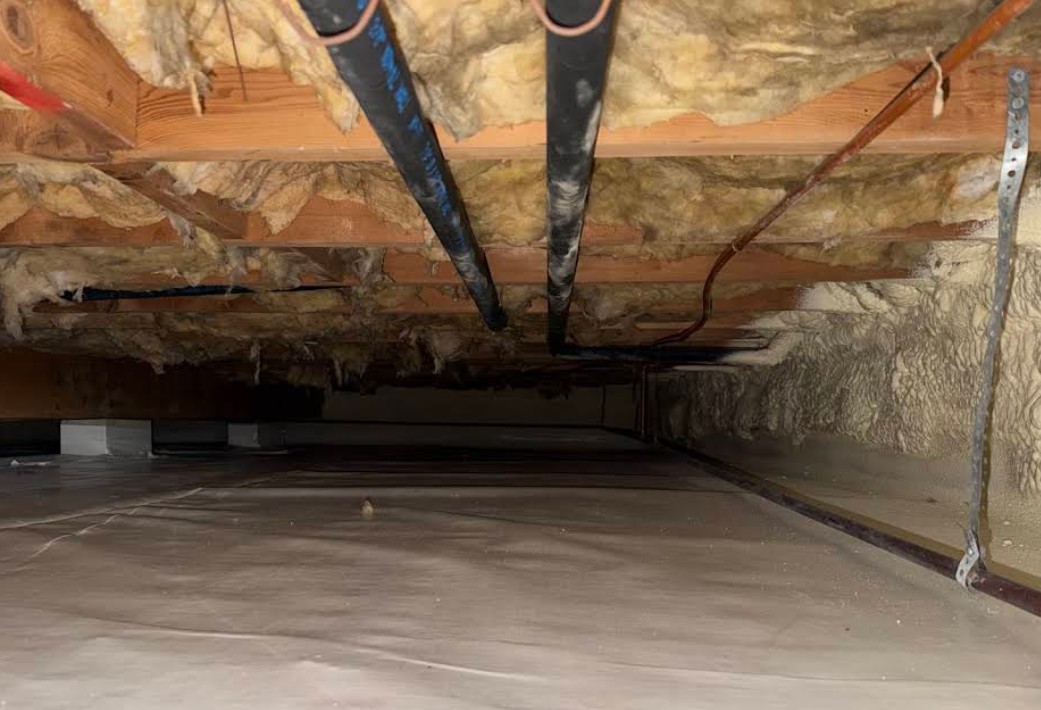
albany home crawl space sanitation after rodent removal

A crawl space gives rodents everything at once: shelter from the weather, warmth rising off the house, insulation to nest in, and water from pipes and damp soil. In Albany, a few local conditions make that pull even stronger.

Albany factor What it means under your floor
About 43% of city homes were built in 1939 or earlier Additions, porches and old foundations full of gaps
Glacial Lake Albany clay under much of the region Soil that holds water and keeps crawl spaces damp
Pine Bush sand on the west side Loose soil rodents can tunnel through easily
59.2 inches of snow and January lows near 16°F in a normal winter Strong push toward any warm space under a house
Orkin's 2026 ranking moved Albany from No. 49 to No. 39 Rodent treatment demand here is rising

Old houses with newer pieces bolted on

Albany's housing is some of the oldest in the country, and a lot of it has been added to over a century. A typical story we see: a full stone cellar under the main house, then a 1920s kitchen addition or an enclosed back porch sitting on a shallow crawl space with a dirt floor. The joint where the addition meets the old foundation almost never seals well, and it's one of the first places we check.

Away from the urban core, the crawl spaces change. Bungalows and Capes in the Helderberg, Buckingham Pond and Whitehall areas, and ranch houses and split-levels in Westmere, Colonie and Menands, often sit on block foundations with screened vents. Those vents, the access hatch and the gaps around pipes are the usual way in.

Clay soil and damp crawl spaces

Thousands of years ago, Glacial Lake Albany covered the whole Capital Region and left layers of silt and clay on the old lake bottom. That clay drains slowly. After a wet spring or a fast snowmelt, water sits against foundations and soaks up into dirt-floor crawl spaces. Damp soil, condensation on cold pipes and sagging wet insulation give rodents water right where they nest, and moisture softens wood sills that they can then chew through.

Sandy soil on the west side

Toward the Albany Pine Bush, Westmere and the Guilderland edge, the topsoil is made of old dune and delta sand from the same lake. Sand is easy digging. Norway rats can tunnel beside a foundation and come up inside a dirt-floor crawl space without ever touching a vent. Where we find that, a vent screen won't fix it; the floor or the base of the wall has to be blocked.

Albany winters push everything underneath

Albany's median first frost lands around mid-October, January lows average about 16°F, and a normal winter brings close to 60 inches of snow. Rats and mice don't hibernate. When the ground freezes, the warmest, most sheltered spot they can reach is often the crawl space under a heated kitchen or bathroom. Snow cover also hides fresh burrows and gnawed vent screens until spring.

Crawl spaces sit at ground level, right where rodents live

Norway rats live in burrows at grade and travel along foundations. House mice need a gap only about a quarter inch wide, roughly the thickness of a pencil. A crawl space vent, a missing hatch cover or a gap around a gas line is at their eye level. That's why a crawl space is often the first part of a house to get infested, and the route rodents use to reach the walls and floors above.

What's Living in Your Crawl Space?

The animal decides the plan. Rats and mice need different traps, enter through different-sized gaps and leave different damage, so identifying them comes first.

Rats in the crawl space

In Albany that almost always means the Norway rat: heavy, brown-gray, 12 to 18 inches including the tail. Norway rats burrow along foundations, tunnel into dirt floors, and travel in from sewer lines and neighboring yards. A gap about the size of a quarter is enough. In a crawl space they chew into plastic drain lines, shred insulation for nests, and dig under footings.

Our crawl space rat removal focuses on the ground: burrows, the soil floor, the base of the walls and any plumbing coming through them. For more on how rats behave in this city, see our rat removal in Albany page.

Mice in the crawl space

Albany crawl spaces see two kinds:

  • House mice live with people year-round and move from the crawl space into walls, cabinets and the kitchen above.
  • White-footed and deer mice come in from yards, woods and parkland, especially on the edges of Albany near the Pine Bush, Normanskill and Washington Park. In the eastern U.S., the white-footed mouse can carry hantavirus, which is why dried droppings in a closed crawl space call for careful cleanup.

Mice need only about a quarter-inch gap and breed fast, so a few in October can be dozens by spring. Crawl space mice removal means sealing the small stuff, too: wire holes, sill gaps and cracked mortar. Read more on our mice removal in Albany page.

Rat or mouse? Quick guide

Clue Rats Mice
Droppings ½–¾ inch, capsule-shaped, blunt ends About ¼ inch, rice-sized, pointed ends
Gap they need About the size of a quarter About ¼ inch, the thickness of a pencil
Sounds from below Heavy thumping, dragging, gnawing Light, fast scratching
Outside signs Burrows 2–4 inches wide along the foundation Few or none
Nests Large, in shredded insulation or soil burrows Small balls of insulation, paper and fabric

Other animals end up under houses too. Skunks, woodchucks and raccoons can den under porches and decks, and squirrels sometimes get into crawl spaces at the rim joist. If that's what you're dealing with, see raccoon removal and squirrel removal.

Signs of Rodents in Your Crawl Space

You don't need to crawl under the house to suspect a problem. Most of these show up from above or outside:

  • A musty, ammonia-like smell in the rooms over the crawl space or coming out of floor registers. Your HVAC system can pull crawl space air into the house.
  • Scratching, scurrying or gnawing under the floor, loudest at night.
  • Insulation hanging down between the floor joists, or batts lying on the ground.
  • Torn or bunched vapor barrier on the crawl space floor.
  • Bent, rusted or chewed vent screens, or a crawl space door that no longer closes tight.
  • Holes or fresh dirt piles along the outside of the foundation, especially under shrubs or next to a porch.
  • Dark grease marks around vent openings and pipe holes where rodents squeeze through.
  • Droppings and nesting material near the access hatch, on sill plates or on top of ductwork.
  • Pets fixated on a floor vent or one spot on the floor.
  • Signs moving upstairs: droppings in kitchen cabinets, noises in walls. Openings around pipes, wires and ducts let rodents climb from the crawl space into the rest of the house.
  • A sudden, strong dead-animal odor, usually after someone used poison.

If you've noticed two or three of these, a rodent inspection is the next step.

What Rodents Do to a Crawl Space

Rodents in a crawl space aren't just a nuisance under the floor. The damage spreads to your heating bills, your air and sometimes the structure.

Insulation and heating bills

Rats and mice pull down fiberglass batts to build nests and tunnel through them, flattening whatever is left. Urine-soaked insulation stops working. In an Albany January, a kitchen or bathroom over a crawl space with ruined insulation gets noticeably colder, and the pipes running through it are more likely to freeze.

Ductwork and indoor air

Many Albany homes with crawl spaces have furnace or AC ducts running through them. Rodents chew into flexible duct and nest inside it. Once that happens, the system can pull air past droppings and urine and push it into the rooms above. That's often the first time people notice anything: a smell that shows up every time the heat kicks on.

Wiring and plumbing

Rodent teeth never stop growing, so they gnaw constantly. In a crawl space that means electrical wiring, PVC drain lines and plastic water supply lines. Chewed wiring is a fire risk, and a gnawed drain leaks right onto the soil, which adds more moisture and makes the space even more attractive.

Vapor barrier and moisture

The plastic sheet over a dirt floor keeps ground moisture out of the house. Rodents tear it, tunnel under it and soak it with urine. Once it's torn, more moisture rises into the joists, which leads to mold, softened wood and a damp smell, especially on the slow-draining clay common around Albany.

Wood and foundations

Rats gnaw sill plates, rim joists and subfloor edges to widen entry holes. Moisture-softened wood makes that easy. Burrowing along a foundation or under a footing can also undermine a porch or addition that was already settling.

Health risks

A crawl space is a closed, poorly ventilated space, and that concentrates what rodents leave behind.

  • Hantavirus: In the eastern U.S. it's carried mainly by white-footed and deer mice. Human cases in New York are rare, but stirring up dried droppings in a tight space is exactly the kind of exposure health officials warn about.
  • Leptospirosis: Spread through rat urine in damp soil and standing water, both common in Albany crawl spaces.
  • Salmonella: Carried on rodent feet and droppings into kitchens and food areas above.
  • Allergies and asthma: Rodent dander, urine and dried droppings can trigger symptoms, especially when the HVAC system circulates crawl space air.
  • Fleas, mites and ticks: Rodents bring them in, and they can move into the house after the rodents are gone.

The practical takeaway: don't crawl in and start sweeping. Let a professional handle heavy contamination.

Our Crawl Space Rodent Removal Process
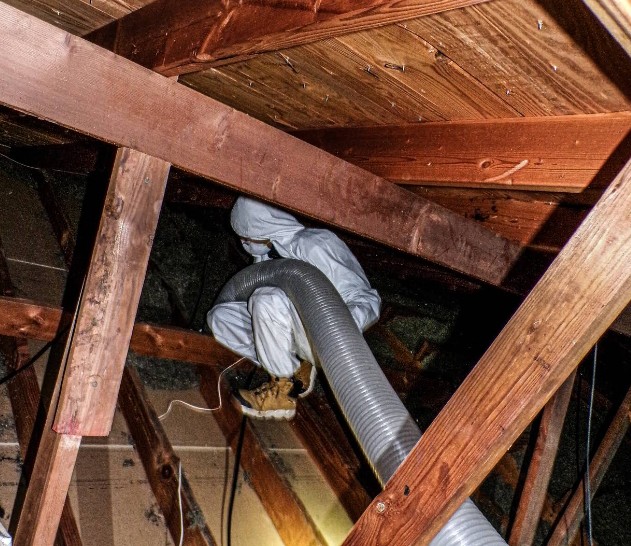
professional working in albany home crawl space

Trapping alone doesn't fix a crawl space. If the entry points stay open and the contaminated insulation stays in place, new rodents move in and the smell never leaves. Every crawl space rodent removal job we do covers five steps.

  1. 1. Inspection, inside and out. We walk the full foundation outside, looking for burrows, damaged vents, gaps around pipes and wires, and the seam where an addition meets the old house. Then we go into the crawl space itself to map droppings, nests, runways, chewed ducts and wiring, torn vapor barrier and moisture. We also check whether rodents have climbed into the walls or floors above. You get photos and a written plan. Details on our rodent inspection.
  2. 2. Trapping and removal. Traps go along the runways and nest areas we found, in covered stations so pets and kids can't reach them. For crawl space rat removal we use heavy rat traps and pre-bait them unset for a few nights, because Norway rats avoid new objects. For crawl space mice removal we use more traps placed closer together along walls and sill plates, since mice cover less ground. We don't put loose poison in crawl spaces, because a rodent that dies under your floor becomes an odor problem. More on rodent trapping.
  3. 3. Cleanup and sanitizing. Once activity stops, we remove droppings, nests, dead rodents and contaminated insulation using wet-cleaning methods that keep dust out of the air, then disinfect the soil, joists, sill plates and foundation walls. See rodent dropping cleanup.
  4. 4. Sealing entry points. Every gap gets closed with materials rodents can't chew: galvanized hardware cloth on vents, steel mesh and mortar in foundation gaps, metal flashing at the base of additions, and a tight, latched access door. More on rodent exclusion.
  5. 5. Restoration and follow-up. We replace damaged insulation and vapor barrier, and recommend moisture fixes where needed. Then we come back to check traps, confirm every seal is holding and make sure there's no new activity.

What the timeline usually looks like

  • Day 1: Inspection, photos, written plan and estimate. Traps go in.
  • First one to two weeks: Return visits every few days to check and reset traps.
  • Once activity stops: Cleanup, sealing and restoration, usually over one or two visits depending on the crawl space size.
  • Final check: A follow-up visit to confirm it's quiet and sealed.

Most single-family crawl spaces are finished within a few weeks. Large crawl spaces, heavy contamination or several additions on one house can take longer.

Need help right away?

A dead rodent smell in the house, rodents chewing into ductwork, or activity next to a baby's room can't wait. We offer same-day visits when our schedule allows, seven days a week, including dead rodent removal and urgent cleanup.

Crawl Space Cleanup and Restoration After Rodents

Getting the rodents out is half the job. What they leave behind keeps smelling, keeps affecting your air and keeps attracting the next rodents until it's removed.

How we clean a contaminated crawl space

Our cleanup follows the U.S. Centers for Disease Control and Prevention's guidance for rodent cleanup, scaled up for tight, closed spaces:

  • Protective gear first. Coveralls, gloves, eye protection and a respirator with HEPA-rated filters. A crawl space traps dust in a way a kitchen doesn't.
  • Air it out. Vents and access doors are opened before work starts so the space isn't sealed up while we disturb it.
  • No dry sweeping or regular vacuuming. Both throw contaminated dust into the air. Droppings, urine and nests are soaked with an EPA-registered disinfectant or a fresh bleach solution and left to sit before anything is picked up.
  • Bag and remove. Nests, dead rodents and droppings are double-bagged and carried out. Contaminated insulation is bagged inside the crawl space so it doesn't shed on the way out.
  • Disinfect every surface they touched. Soil or vapor barrier, joists, sill plates, foundation walls, pipes and the outside of ductwork.
  • Deodorize. Urine soaks into wood and soil. Where the smell lingers, we use enzyme-based treatments that break down the source instead of covering it.

What gets repaired or replaced

Material Replace when What goes back in
Fiberglass batts between joists Torn down, flattened, urine-soaked or nested in New batts held up with wire supports or netting, or rigid foam where suited
Vapor barrier on dirt floor Torn, tunneled under or urine-soaked A new, thicker polyethylene barrier, overlapped and taped at seams, run up the walls where possible
Flexible ductwork Chewed, nested in or contaminated We flag it and clean around it; duct replacement goes to an HVAC contractor
Wiring Insulation chewed through We flag it; repairs go to a licensed electrician
Plastic drain or water lines Gnawed or leaking We flag it; repairs go to a plumber
Sill plate or rim joist Gnawed open or soft from moisture Metal patch over gnaw holes; rotted wood flagged for a carpenter

For attic contamination in the same house, see our attic rodent removal service. Many Albany homes have activity at both ends of the house.

Sealing a Crawl Space So Rodents Stay Out

Sealing is what ends the problem. The goal is simple: no gap bigger than a quarter inch anywhere a rodent can reach, closed with something it can't chew.

Where we seal

  • Foundation vents. Old screens rust and tear. We cover vents with galvanized hardware cloth or rodent-proof vent covers, so the crawl space can still breathe if it's meant to.
  • The access door or hatch. A warped plywood cover is an open door. It gets replaced or rebuilt to close tight and latch.
  • Utility openings. Gaps around gas lines, water pipes, sewer lines, AC lines and electrical conduit are packed with steel mesh and sealed.
  • The addition seam. Where a porch or kitchen addition meets the original foundation, we close the gap with metal flashing and mortar.
  • Foundation cracks and loose mortar. Patched with mortar or concrete, not caulk.
  • Sill plate and rim joist. Gnawed holes get metal patches.
  • Under the floor, when rats are tunneling. In dirt-floor crawl spaces with burrowing rats, often on sandy soil toward the Pine Bush, we install hardware cloth along the base of the walls or recommend a thin concrete "rat slab" over the floor.

Materials that hold up (and ones that don't)

Use this Not this
¼-inch galvanized hardware cloth on vents and gaps Window screen or plastic mesh
Steel or copper mesh packed into gaps, then sealed Expanding foam by itself
Mortar or concrete patch on foundation holes Caulk or wood filler
Metal flashing at addition seams and sill gaps Wood trim or vinyl
Solid, latched access door Loose plywood leaned in place

Should you encapsulate your crawl space?

Encapsulation means covering the floor and walls with a heavy, sealed vapor barrier, closing the vents and controlling humidity, often with a dehumidifier. In Albany's damp clay soil, it can make a crawl space drier, warmer and much easier to inspect, and it takes away the moisture rodents rely on.

What encapsulation doesn't do is keep rodents out by itself. Plastic isn't chew-proof. The rodents have to be removed and the structural gaps sealed first, or you'll just have rodents living under brand-new plastic. We handle removal, cleanup and sealing so the crawl space is ready for an encapsulation contractor, or simply sealed and lined with a new vapor barrier if full encapsulation isn't needed.

Keeping your crawl space rodent-free

  • Look at your vents and access door every fall before the October frost. Bent screens and gaps are easy to spot from outside.
  • Keep mulch, firewood and stored items away from the foundation, especially around vents.
  • Trim shrubs back at least a foot or two so you can see the foundation.
  • Point downspouts away from the house and fix grading that sends water toward the foundation.
  • Fix plumbing leaks in the crawl space quickly.
  • Don't store cardboard, pet food, birdseed or garden seed in the crawl space.
  • Keep trash and compost bins closed and away from the foundation.
  • After snowmelt each spring, check along the foundation for new burrows and chewed vent screens.
  • Book a yearly check if you've had rodents before. Catching a new gap early is far cheaper than a second cleanup.

Crawl Space Rodent Problems Around Albany, Neighborhood by Neighborhood

The crawl spaces we work in look very different from one side of the city to the other.

Area Typical crawl space What we usually find
Center Square, Mansion District, Arbor Hill, South End Shallow crawl spaces under rear additions and enclosed porches behind rowhouses Gaps at the addition seam; Norway rats coming from alleys, sewers and neighboring yards
Pine Hills Crawl spaces under porches, kitchen additions and sunrooms on two- and three-family homes Mice and rats moving between units; damage left unnoticed through tenant turnover
Helderberg, Buckingham Pond, Whitehall, New Scotland Ave 1920s–1950s bungalows and Capes, some with partial crawl spaces Rusted vent screens, warped access doors, mice nesting in floor insulation
Washington Park, Delaware Ave, Normanskill edge Older homes near parkland and wooded ravines White-footed and deer mice coming in from green space
Westmere, Guilderland edge, Pine Bush area Ranch homes and split-levels with block foundations Sandy soil, rats tunneling under footings, mice through vents
Colonie and Menands Mid-century ranches and capes, some backing onto commercial strips Vent and hatch entry; steady pressure near dumpsters and drainage areas

We also serve Menands, Colonie and Westmere. If you rent out a two- or three-family in Pine Hills or the South End, catching a crawl space problem between tenants is far easier than handling it mid-lease.

Crawl Space Rodent Activity Through the Albany Year

Season What's happening What to do
Fall (Sept–Nov) First frost around mid-October. Rats and mice move under houses looking for warmth. Our busiest season for crawl space calls. Check vents and the access door in September; call at the first smell or noise
Winter (Dec–Feb) January lows near 16°F. Rodents settle under heated rooms, nest in insulation and keep breeding. Snow hides burrows outside. Trap now while they're confined; watch for smells from floor registers
Spring (Mar–May) Snowmelt and spring rain saturate clay soil. Crawl spaces get wet, vapor barriers get muddy, and burrows reappear. Look for new holes along the foundation; fix drainage; good time for cleanup
Summer (June–Aug) Drier, warmer, easiest crawl space access. Rodents feed outdoors but still shelter underneath. Best time for sealing, insulation and vapor barrier work before fall

Cost of Crawl Space Rodent Control in Albany

There's no flat price for crawl space rodent control in Albany, because no two crawl spaces are alike. A small, dry space under one porch is a very different job from a dirt-floor crawl space under a whole house full of nests and soaked insulation. We quote after an inspection, in writing, with each part of the job listed separately so you can see where the money goes.

Part of the job How it's usually quoted What raises or lowers it
Inspection Single visit, with photos and a written plan Crawl space size and how hard it is to get into
Trapping and removal A program with set return visits Rats vs. mice, how many, how long they've been there
Cleanup and sanitizing By area and how contaminated it is Amount of droppings, nests, dead rodents, odor
Insulation removal and replacement By square footage How much is damaged, type of insulation going back in
Vapor barrier By square footage Dirt vs. concrete floor, whether it runs up the walls
Sealing entry points By the number and type of openings Vents, access door, addition seams, foundation repairs, rat slab

What makes a crawl space job bigger:

  • A large or very low crawl space that's slow and tight to work in
  • Rats rather than mice, especially with burrowing under the footing
  • Months of buildup: heavy droppings, multiple nests, urine-soaked insulation
  • Several additions or porches, each with its own crawl space and seams
  • Moisture problems that need to be fixed before new insulation goes in

Red flags when comparing quotes: traps only with no sealing, poison placed in the crawl space, no mention of cleanup, or a guarantee with no exclusion work behind it.

DIY vs. Professional Crawl Space Rodent Removal

If you can easily get into a clean, dry crawl space and you've seen a single mouse, setting a few snap traps along the wall is reasonable. Beyond that, the crawl space itself works against you.

  • Getting in is hard and unpleasant. Low clearance, mud, sharp edges, wiring and nails make it slow and risky, especially for a full cleanup.
  • The air is the real hazard. Disturbing dried droppings in a closed space is the exposure health officials warn about. Proper cleanup needs a respirator, protective clothing and wet-cleaning methods.
  • Poison backfires. Rodents that eat bait often die under your floor or inside a wall, and the smell can last for weeks.
  • Missed gaps bring them back. One open vent corner or addition seam is enough, and many entry points are only visible from inside the crawl space.
  • Some "fixes" don't work at all. Glue boards, peppermint oil, mothballs and plug-in ultrasonic devices won't clear an established crawl space infestation. Expanding foam alone gets chewed through.

If you do try it yourself, use covered snap traps placed along walls and sill plates, don't sweep or vacuum droppings, and never put poison in the crawl space.

Crawl Space Rodent FAQs

Are rodents in the crawl space dangerous?

+

They can be. Droppings and urine in a closed crawl space can carry bacteria and viruses, and your HVAC system can pull that air into the house. Rodents also chew wiring, ducts and plumbing. It's worth dealing with quickly and not cleaning up by hand without protection.

How do rats and mice get into a crawl space?

+

Through damaged foundation vents, loose access doors, gaps around pipes and wires, cracks in the foundation, and the seam where an addition meets the original house. Mice need only about a quarter-inch gap; rats need a hole about the size of a quarter, or they simply tunnel under the footing.

Can rodents get from the crawl space into my house?

+

Yes. They follow pipes, wires and ductwork up into wall cavities, kitchen cabinets and floors. That's why our inspection checks the rooms above the crawl space, too.

How long does crawl space rodent removal take?

+

Most single-family crawl spaces are done within a few weeks: trapping visits every few days at first, then cleanup, sealing and a final check. Large or heavily contaminated crawl spaces take longer.

Do you remove contaminated insulation?

+

Yes. Insulation that's been nested in, flattened or soaked with urine is bagged and removed, the area is disinfected, and new insulation goes back in.

Do I need to replace my vapor barrier?

+

If it's torn, tunneled under or soaked with urine, yes. A damaged vapor barrier lets ground moisture into the crawl space, which on Albany's clay soil can mean mold and a constant musty smell.

Will encapsulation keep rodents out?

+

Not on its own. Rodents can chew through plastic. Remove the rodents and seal the structural gaps first; encapsulation then helps by keeping the space dry and easy to inspect.

Will the rodents come back?

+

Not if every entry point is sealed with chew-proof material and the attractants are fixed. Most repeat problems come from a missed vent corner, a gap at an addition, or a moisture problem that was never addressed.

How do Albany winters affect crawl space rodents?

+

Cold is the main reason they're there. Once the ground freezes, the crawl space under a heated room is one of the warmest places a rodent can reach, and they'll stay and breed there until spring. Fall is the best time to seal, and winter is a good time to trap.

Is crawl space rodent control safe for kids and pets?

+

Yes. We rely on covered traps and sealing, not loose poison in the crawl space, and every trap sits in a closed station. You can keep using the house normally while we work.

Do you offer same-day service?

+

Yes, when our schedule allows, seven days a week from 9 AM to 8 PM, including dead rodent removal and urgent odor problems.

Scroll to Top
Call Now: (518) 715 8776