
Rodent Dropping Cleanup in Albany, NY
Mouse and rat droppings, urine and nests cleaned out of kitchens, cellars, attics and crawl spaces the safe way: soaked, bagged and disinfected, never swept into the air you breathe.
- Mouse and Rat Dropping Cleanup
- Respirators and Protective Gear
- Disinfection and Odor Treatment
- Licensed and Insured
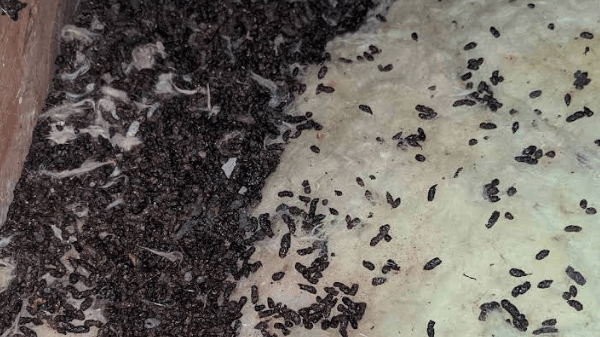
Rodent Dropping Cleaning Service in Albany
The mice are gone, or nearly gone. What they left behind is not. There are droppings along the back of the kitchen cabinets, a urine smell in the cellar, and a layer of shredded insulation and pellets across the attic floor that nobody wants to touch.
That is the right instinct. Rodent droppings and urine are not ordinary dirt, and the way most people clean them up, with a broom or a vacuum, is the way that puts the risk into the air.
We are Albany Rodent Control, a local company based on State Street. Our rodent dropping clean up service covers mouse dropping cleaning and rat dropping cleaning, removing droppings, urine, nests and soiled material from homes and businesses across Albany, disinfects what is left, and deals with the smell. We do it with the method the CDC and the New York State Department of Health recommend, in protective gear, so the job is finished without anyone breathing it in.
Who calls us for rodent poop cleanup
- Homeowners who have trapped the mice and are left with the mess
- Buyers of an older house, especially one that sat empty over a winter
- Landlords turning over an apartment before the next tenant or a city rental inspection
- People clearing out a parent's house, a camp or a long-closed garage
- Restaurants and food businesses that found activity in storage or behind equipment
- Anyone with a smell in the attic or cellar they cannot get rid of
Why Rodent Poop Needs Proper Cleanup
Most of the risk from rodents comes from what they leave, not from the animals themselves. Diseases are spread mainly when people breathe in dust from dried urine, droppings and nesting material, or touch their mouth or eyes after handling it. Sweeping, vacuuming and shaking out insulation are exactly what turn that material into dust.
The illnesses that public health agencies link to rodent waste include:
-
Hantavirus
Carried in the urine, droppings and saliva of wild mice. It is rare in New York: the State Department of Health counts six state residents diagnosed between 1995 and 2023. It is also serious, with no specific cure, and most cases have come from breathing dust while cleaning closed-up buildings, cellars, sheds and garages. In our region the CDC names the white-footed mouse as the carrier of the strain known as New York virus. It is the same native mouse that moves into Albany attics and garages from wooded lots each fall.
-
Lymphocytic choriomeningitis (LCM)
A virus spread by the common house mouse through fresh urine, droppings, saliva and nesting material. The CDC notes a higher risk of miscarriage and birth defects for pregnant women, and more severe illness for people with weakened immune systems.
-
Leptospirosis
A bacterial disease passed in the urine of rats and other animals. The bacteria can survive in water and soil for weeks to months, which matters in damp, flood-prone cellars.
-
Allergies and asthma
Proteins in mouse urine and droppings can trigger allergies and asthma, and they build up in closed-up houses through the winter.
What droppings do to a building
Urine soaks into wood, plaster, subflooring and insulation. The ammonia smell grows on warm days and does not go away with air freshener.
Rodents follow the smell of earlier rodents. Droppings and urine left in place lead new mice straight to the same spots.
Nests, droppings and dead rodents draw carpet beetles, clothes moths and flies.
Insulation soaked with urine and packed with droppings stops insulating and has to come out.
Mouse Droppings or Rat Droppings?
The first thing we do is read what was left. The droppings tell us the animal, how long it has been there and how big the cleanup is.
| Feature | Mouse droppings | Rat droppings |
|---|---|---|
| Size | About the size of a grain of rice, roughly a quarter of an inch | About three-quarters of an inch, like a large raisin or a bean |
| Shape | Thin, with pointed ends | Thick and capsule-shaped, with blunt ends |
| Where | Scattered along walls, inside drawers and cabinets, on shelves and across attic insulation | Grouped in piles along cellar walls, near floor drains, behind appliances and along foundations |
| Animal in Albany | House mice indoors; white-footed and deer mice in attics, garages and cabins near woods | Norway rats, mostly in cellars and at ground level |
| What it means for cleanup | Usually spread over a large area in small amounts | Usually concentrated, with heavier urine staining and odor |
What else droppings tell us
- Age. Fresh droppings are dark and soft. Old ones turn gray, dry and crumbly. A mix of fresh and old means the activity is still going on.
- Size range. Large and very small droppings in the same spot mean adults and young, so rodents are breeding in the building.
- Amount. A mouse leaves 50 to 60 droppings a day and a rat 40 to 50, so a big pile does not always mean a big population. Spread across many rooms is the more serious sign.
- Not rodents at all. Larger, rounded pellets clustered at attic eaves are often squirrel droppings. Droppings that crumble into shiny insect fragments are from bats, which are handled under separate state rules. Large tubular droppings in one latrine pile point to raccoons, whose waste carries its own parasite risk and needs extra care.
Where We Clean Up Rodent Droppings
Rodents leave waste along the routes they travel and pile it up where they nest. In an Albany house that usually means several floors, not one room.
From older Victorian cellars to modern commercial kitchens, each environment requires tailored decontamination protocols to ensure pathogens are completely neutralized.
Behind and under the stove and refrigerator, inside the sink cabinet, along cabinet bases and toe kicks, inside drawers and on pantry shelves. We clean the hard surfaces where food is prepared and stored, and tell you which stored food and packaging should simply be thrown away.
The busiest spot in most older Albany homes. Droppings collect along the top of the foundation wall, on the sill plate, around the boiler or furnace, under the cellar stairs and on anything stored on the floor. Stone and dirt-floor cellars need a different approach from a finished basement, because the material cannot be mopped.
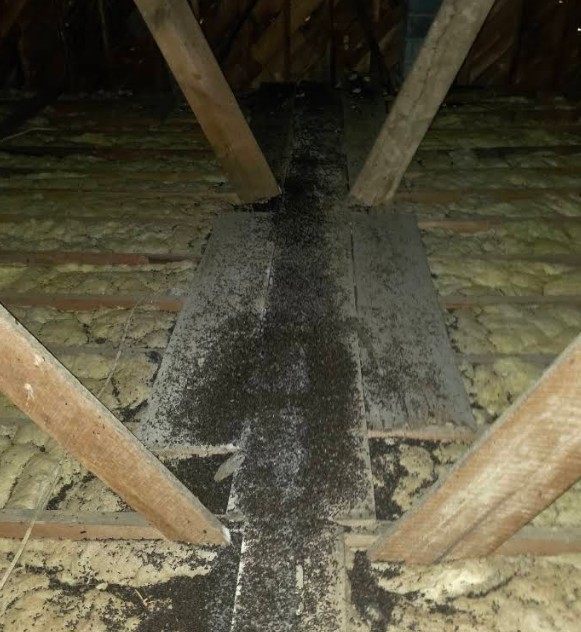
Mice and squirrels nest in insulation and use it as a toilet. Droppings collect on top, urine soaks in, and runways are pressed through it. Some attics need spot cleaning. Others need the insulation out. Our attic rodent removal page covers the full attic job.
Dark, damp and rarely entered, crawl spaces can hold years of droppings, nests and dead rodents on a dirt floor or vapor barrier. Cleanup there is done on our knees in protective gear, and often goes with the sealing work on our crawl space rodent control page.
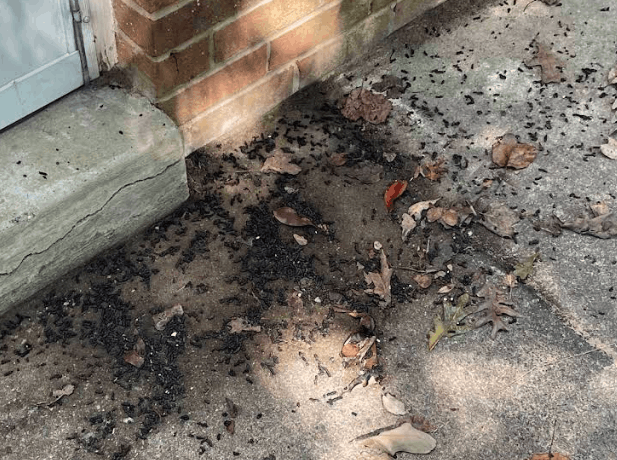
Garages, sheds, porches, camps and summer places closed up for months are the classic setting for exposure while cleaning. Mice nest in stored boxes, seed bags, lawn furniture cushions and vehicles.
Droppings inside walls and above drop ceilings are often found during renovation. Where rodents have got into heating and cooling ducts, the CDC advises bringing in a professional, and we coordinate with a duct cleaning company when the ducts need it.
Dry storage, behind cook lines, under equipment, inside walk-in boxes and above drop ceilings. We can work outside your opening hours.
Our Rodent Dropping Cleanup Process
Our method follows the CDC's guidance for cleaning up after rodents, scaled up with the equipment that guidance calls for in heavy infestations.
We find every area that needs cleaning, not just the one you noticed. We identify the animal from the droppings, check whether activity is still going on, and look for dead rodents, nests and soiled insulation. You get a written scope before we start.
Cleaning around an active infestation only lasts until the next night. If rodents are still present, we deal with them first through rodent trapping, or plan the cleanup for when the traps go quiet.
The space is aired out before work begins. Our crew wears the protective gear the CDC lists for heavy rodent infestations:
- Half-mask respirators with HEPA filters (or PAPR)
- Disposable coveralls
- Rubber, latex or vinyl gloves
- Protective goggles
- Rubber boots or shoe covers
We close off the work area from the rest of the house where we can, so dust does not travel.
This is the step that makes the difference. Droppings, urine, nests and dead rodents are sprayed with an EPA-registered disinfectant or bleach solution until thoroughly wet, then left to soak before anyone touches them. Only then are they wiped or lifted up.
Nothing is swept and nothing is vacuumed dry. Where a vacuum is needed, for example on an attic floor, it is a HEPA-filtered unit used after the material has been wetted.
Waste, dead rodents, nests and soiled material go into plastic bags, which are sealed and then bagged again before they leave the work area. We take them away.
Floors, shelves, cabinet bases, sill plates, joists and every hard surface in the affected area are disinfected after the visible waste is gone.
Urine odor lives in porous material. We treat it at the source with enzyme-based products made to break down urine, and remove the material that cannot be saved.
You get before-and-after photos of every area we cleaned. New droppings on a surface we cleaned is the clearest sign that rodents are still getting in, which is why a clean baseline is useful long after the job is done.
Insulation, Belongings and Odor
Contaminated insulation
Insulation cannot be disinfected. Once it is soaked with urine and full of droppings, it has to come out. We tell you which of three levels your attic or crawl space needs:
| Level | When it applies | What happens |
|---|---|---|
| Spot cleanup | Short-term activity in one area | Nests and droppings removed, area disinfected, insulation stays |
| Partial removal | Runways and nests through one section | Soiled insulation in that section bagged and removed, surfaces below disinfected, section re-insulated |
| Full removal | Contamination across the whole space, or years old | All insulation removed, attic floor cleaned and disinfected, odor treated, new insulation installed |
Two things in older Albany attics change the plan:
- Vermiculite. Loose, pebbly insulation that is gray-brown or silver-gold. The EPA says to assume it contains asbestos and leave it undisturbed. If we find it, we stop, and removal goes to a licensed asbestos contractor.
- Knob-and-tube wiring. Early wiring still live in many pre-1940 houses. It should be checked by a licensed electrician before new insulation covers it.
Pro Tip: When new insulation goes in, New York's NYSERDA programs offer rebates on air sealing and insulation, so it is worth checking before you pay for all of it.
Stored belongings
The CDC's guidance for what was stored where rodents lived:
- Hard items such as plastic, glass and metal are disinfected and kept.
- Clothing, bedding and fabric are washed in hot water and dried on high heat.
- Rugs and upholstered furniture are shampooed or steam-cleaned with a commercial disinfectant.
- Cardboard boxes with droppings or urine on them are thrown away.
- Books, papers and photos that cannot be cleaned with liquid can be left in sunlight for several hours, or kept in a rodent-free space for at least three weeks, with six weeks recommended.
We move and bag the things you decide to throw out, and help you sort what can be saved.
Rodent urine odor
The smell comes from urine soaked into wood, plaster, subfloor and insulation, and from dead rodents in walls and ceilings. Masking it does not work. We remove the soaked material that can be removed, treat the rest at the source with enzyme products made for urine, and find and remove dead animals where we can reach them.
Cleaning Up a Few Mouse Droppings Yourself
A handful of mouse droppings under the kitchen sink does not need a professional crew. This is the method the CDC and the New York State Department of Health give:
- 1 Air it out. Open doors and windows for 30 minutes before you start, and leave the space while it airs.
- 2 Wear protection. Put on rubber or plastic gloves.
- 3 Soak everything. Spray droppings and urine with a household disinfectant labeled as one, or a fresh bleach solution of 1½ cups of bleach to 1 gallon of water, until very wet.
- 4 Wait 5 minutes, or as long as the disinfectant label says.
- 5 Wipe up with paper towels, and put them in a plastic bag.
- 6 Disinfect the area, mopping or sponging floors, counters, cabinets and drawers.
- 7 Bag it twice. Tie the bag, put it in a second bag and tie that too, then put it in a covered outdoor bin.
- 8 Sanitize hands. Wash your gloved hands, take the gloves off, then wash your hands with soap and warm water.
When to call a professional instead:
- Droppings across more than one room, or more than a small area
- Anything in attic insulation, a crawl space or inside walls
- A cabin, garage, shed or house that has been closed up for months
- Heavy urine staining or an odor that will not clear
- Dead rodents you cannot reach
- Droppings in heating ducts
- Anyone in the household who is pregnant, has asthma or a weakened immune system
- You do not have a fitted respirator and protective clothing
The CDC treats heavy infestations as a separate category that calls for respirators and full protective gear. That is the point where a few paper towels stop being the right tool.