
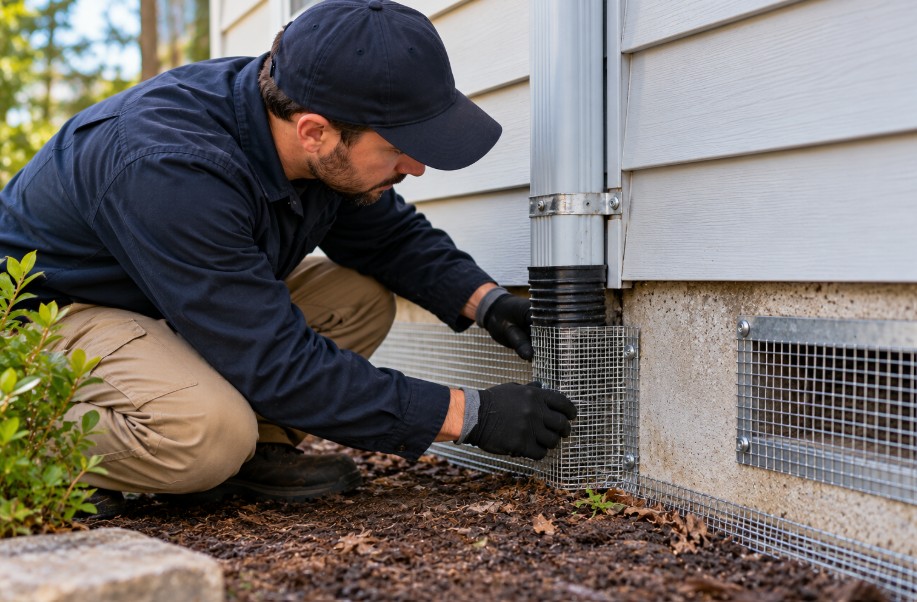
Rodent Exclusion and Proofing in Albany, NY
We find every gap mice, rats and squirrels use to get into your home and seal it in metal, mesh and mortar, from the cellar sill to the roofline. Rodent sealing that is built to outlast the winter.
Traps catch the mice that are in your house tonight. They do nothing about the gap under the cellar window that let them in, and that will let the next ones in when the weather turns.
Rodent exclusion is the work that closes those gaps. You will also hear it called rodent proofing or rodent sealing. They are three names for the same job: finding every opening a rodent can use and closing it with something it cannot chew through.
We are Albany Rodent Control, a local company based on State Street. We seal houses in Pine Hills, Center Square, Arbor Hill and across the Capital Region, where old foundations, deep cellars and shared walls give rodents more ways in than most people expect.
Understanding Rodent Exclusion & Prevention
Exclusion is a building repair, done with a rodent's abilities in mind. It has three parts:
Find Every Entry Point
Locating active gaps, concealed structural openings and subtle routes from cellar to attic.
Seal Each One Permanently
Closing penetrations using chew-proof galvanized metal, wire mesh and masonry mortar.
Reinforce Vulnerable Spots
Strengthening areas likely to fail next before winter temperatures drive rodents inside.
How small a gap is enough
| Animal | Gets through | What that looks like |
|---|---|---|
| Mouse | A gap of about a quarter of an inch | The width of a pencil. If a pencil slides in, so can a mouse. |
| Rat | A hole of about half an inch | Smaller than a dime |
| Gray squirrel | Any gap it can start chewing | A soft fascia board or a loose soffit corner is enough |
Size is only part of it. Mice climb brick, wood and wire, run along cables and jump a foot straight up. Rats can leap about three feet, climb the outside of a pipe and gnaw through wood, plaster, wallboard, aluminum siding and even concrete block once they find an edge to start on. That is why sealing has to cover the roofline as well as the foundation, and why the material matters as much as the patch.
Does sealing work?
National Park Service Building Study
Yes, and it has been measured. A National Park Service study of its own buildings found that repairing structural gaps cut rodent infestations by more than 90 percent compared with buildings left as they were. No trap or bait program comes close to that on its own.
Why Rodents Are a Serious Problem
Sealing a house costs more up front than a box of traps. These are the reasons it is worth it.
Health
Droppings and urine end up on counters, in pantries and in the insulation. They contaminate food areas and can aggravate asthma and allergies.
Damage
Rodents chew wiring, which is a fire risk, and they tear up insulation, gnaw wood and damage things you cannot see inside the walls.
Noise and odor
Scratching at night, movement in the ceiling and a smell that does not clear are signs of animals living in the structure.
It repeats
An unsealed house that had mice last winter will have them again this winter. Every October brings a new group looking for the same gap.
Comprehensive Rodent Inspection Process
You cannot seal what you have not found, and the gap that matters is rarely the obvious one. Before any sealing we inspect the whole building, outside and in.
Two Simple Field Checks That Reveal Hidden Entry Points
- The Daytime Darkness Check: In an attic or crawl space we turn the lights off in daytime and look for daylight coming in.
- The Pencil Gauge Check: On the outside, we mark every gap a pencil will fit into, including the small ones, because small gaps get chewed into larger ones.
Full Photo Report: You get a list of every entry point with photos, and a plan for sealing each one. The full walk-through is described on our rodent inspection page.
View Rodent InspectionAlbany Rodent Control Exclusion Process

Our systematic 4-step exclusion protocol ensures your building is sealed permanently with materials rodents cannot breach.
Step 1: Identify all entry points
We map three kinds of opening: the ones in use now, the ones that have been used before, and the weak spots that will open next. On an Albany house that list usually runs from the cellar to the ridge, and it is longer than people expect.
Step 2: Seal and reinforce
Each gap gets the material that suits it: steel mesh over vents, metal flashing along chewed edges, copper mesh packed into pipe holes, mortar in masonry and a professional sealant to finish. Nothing is closed with foam or caulk alone.
Step 3: Secure vulnerable areas
Some places have no hole today and will have one within a winter or two: a soffit going soft, an unscreened gable vent, a crawl space hatch that does not close tight, a cellar door with no sweep. We reinforce those while we are there, because a second visit costs you more than a few extra feet of mesh.
Step 4: Prevention and long-term protection
You get photos of every seal and plain advice for keeping the house tight:
- Walk the outside each fall, before the first frost, and again in spring
- Check the seals after any plumber, electrician or cable installer has worked on the house, since new lines mean new holes
- Keep cellars dry and stored items off the floor and away from the walls
- Keep shrubs, ivy and firewood back from the foundation, and tree limbs back from the roof
Primary Entry Points We Seal
Rodent proofing is done area by area. This is what we seal in each part of an Albany house, and why it matters there.
Basement and cellar sealing
Most mice in Albany get in below the first floor, so this is where most of the work is.
- The sill line: The joint where the wooden frame sits on the foundation is one of the most common mouse entries we find. We close it with metal and mesh along its full length.
- Foundation cracks and mortar joints: Stone and brick foundations lose mortar over the decades. Open joints are repointed with mesh set into the mortar.
- Cellar windows and wells: Rotted frames, broken panes and loose sashes are repaired or screened in metal.
- Coal chutes and old openings: Abandoned chutes, bricked-up doors and disused vents are sealed solid.
- Bulkhead and cellar doors: Fitted with sweeps and metal edging where they have been gnawed.
- Floor drains: Fitted with secured metal grates. Rats travel through sewer pipes, so a broken or uncapped drain line is something we flag for a plumber.
- Pipe and wire holes: Every gas, water, oil, electric and cable line through the wall is packed with copper mesh and sealed.
Crawl space sealing
Crawl spaces are dark, undisturbed and usually vented straight to the outside.
- Vents screened with quarter-inch steel mesh, which keeps the airflow and stops the mice
- Access hatches rebuilt so they close tight and latch
- Gaps where the crawl space meets the main foundation
- Holes around pipes, ducts and wiring that run up into the floor above
Attic and roofline sealing
Roofline work keeps out squirrels and the field mice that climb. It is also where ladder work and metal matter most.
- Soffits and fascia: Loose panels refastened, rotted or chewed boards repaired and backed with metal
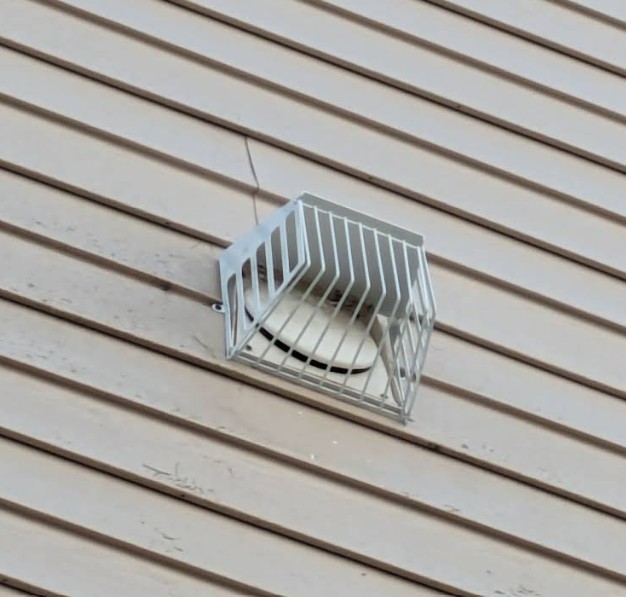
- Gable, ridge and roof vents: Screened from behind with steel mesh so the vent still breathes
- The gap behind the gutter: Where the roof deck meets the fascia board, a gap common on newer houses
- Roof joints: Dormer corners and places where one roof meets another or meets a wall
- Chimneys: Capped, with the flashing checked
- Plumbing stacks and bath-fan outlets: Sealed where they pass through the roof
- Wall cavities: In older frame houses the wall cavities open into the attic, and we block them at the top
Garage sealing
- The rubber seal along the bottom of the overhead door, and the corners where it meets the frame
- The side door sweep and threshold
- The wall between an attached garage and the house, including the step up to the kitchen door
- Pipe, wire and vent holes in that shared wall
Doors and windows
- Door sweeps on every exterior door: A gap you can see daylight through is a gap a mouse can use.
- Metal kick plates on doors that have been gnawed
- Thresholds, and the bottom corners of door frames
- Weather stripping replaced where it is worn or cracked
- Window and door screens repaired in metal
Vents and utility lines
- Dryer vents fitted with a working flap and a mesh guard
- Bath, kitchen and foundation vents screened
- Air-conditioning lines, hose spigots, gas meters and cable entries sealed where they enter the wall
- The meter and service entry, where several lines often share one oversized hole
Porches, steps, decks and sheds
Open space under a porch is shelter for rats, skunks, woodchucks and raccoons, and it leads straight to the foundation. We screen it with heavy mesh that is bent outward at the bottom and buried, so animals cannot dig under it.
Inside the house
Exclusion also means stopping rodents from moving around inside once they are in.
- Pipe holes under kitchen and bathroom sinks
- Radiator and heating pipe holes through the floors, a standard mouse route in older Albany houses
- Gaps behind the stove and at the back of cabinets
- Party walls and shared cellars in rowhouses and two-families
Materials That Stop Rodents, and Materials That Do Not
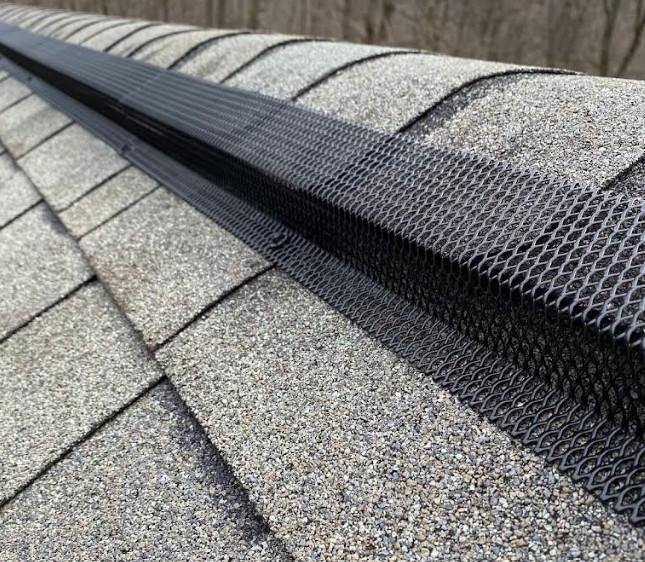
Most failed rodent proofing fails on materials. A gap closed with the wrong thing looks sealed and is open again by spring.
What we use
| Material | Where it goes | Why it works |
|---|---|---|
| Quarter-inch galvanized steel mesh (hardware cloth) | Vents, crawl space openings, soffits, under porches | Too small for a mouse to pass and too hard to chew, and air still flows through it |
| Sheet metal and flashing | Chewed door corners, sill lines, fascia edges, roof joints | Leaves no edge for teeth to start on |
| Copper mesh | Packed around pipes, wires and cables | Does not rust, grips in the hole and cannot be pulled out or chewed through |
| Mortar and concrete patch | Foundation cracks, open joints, holes in masonry | Becomes part of the wall |
| Exterior sealant | Over mesh and around finished edges | Holds the mesh in place and keeps weather out |
| Door sweeps and thresholds | Exterior, cellar and garage doors | Close the gap that opens every time a door wears or drops |
| Chimney caps and vent guards | Chimneys, dryer and bath-fan outlets | Keep the opening working while blocking it to animals |
What we do not rely on
Why Albany Homes Need Special Treatment
A sealing plan written for a ten-year-old house in the suburbs does not fit most of this city. Five local conditions shape how we work.
Old construction. Much of Albany's housing predates 1940. Stone foundations, soft mortar, wooden sills and a century of added pipes and wires mean far more gaps, in harder places.
Freeze and thaw. Albany winters swing above and below freezing for months. Water gets into small cracks, freezes and widens them, so a house that was tight last fall may not be tight this fall.
Damp cellars. Many older cellars sit on stone with no moisture barrier. Damp rots sills and cellar window frames, and soft wood is where gnawing starts.
Dense blocks and shared walls. In a rowhouse or two-family, your building's weak point may be on your neighbor's side of the wall.
Parks, trees and water. Blocks near Washington Park, Lincoln Park, Buckingham Lake and the Hudson get more squirrels, field mice and rats than blocks without them.
What exclusion looks like by house type
| Building | Typical neighborhoods | Where the sealing work concentrates |
|---|---|---|
| Brick and brownstone rowhouses | Center Square, Hudson/Park, Mansion District, Arbor Hill, the Pastures | Repointing the foundation with mesh, sealing coal chutes and areaway doors, closing gaps along the party wall and shared cellar, screening the roof hatch and cornice |
| Frame two-families and flats | Pine Hills, Delaware Avenue, Helderberg, Melrose, Park South | Metal along the sill, screening under the porch, new cellar window screens, blocking the open wall cavities at the cellar and attic, sealing heating pipe holes on every floor |
| Postwar capes and ranches | Buckingham Lake, Crestwood, New Scotland, Whitehall | Corner cracks in block foundations, the garage door seal and the garage-to-house wall, pipe holes through the slab, gable vents and dropped soffit panels |
| Later subdivisions and townhouses | Upper Washington Avenue, the Pine Bush edge, Guilderland | The gap behind the gutters, ridge and gable vents, dryer and bath vents, air-conditioning lines, gaps in shared attic walls |
| Restaurants and commercial buildings | Lark Street, downtown, the Warehouse District, Central Avenue | Loading and back doors, floor drains, pipe chases between floors, dumpster enclosures, drop ceilings |
When to Rodent-Proof a Home in Albany
Exclusion can be done in any month, but the calendar makes some months far better than others.
| When | Why |
|---|---|
| August to early October | The best window. Mice have not moved in yet, mortar and sealant cure properly, and roof work is safe. Sealing now prevents the problem. |
| Mid-October to December | Mice are arriving. Sealing still works, but it is done together with trapping, because some are already inside. |
| January to March | Winter sealing. Sealing indoors and at ground level continues. Roofline work waits for safe conditions, and mortar needs temperatures above freezing. |
| April to July | Spring and summer. A good time for roofline and squirrel work, and for repairing what winter opened. |
If you are reading this in the fall with mice already in the kitchen, do not wait for next summer. Clear them and seal now, then check the roofline in spring.
Historic Districts, Rentals and Shared Buildings
Homes in Albany's historic districts
Parts of Center Square, Hudson/Park, the Mansion District, Arbor Hill and other neighborhoods are local historic districts. Exterior work there can need a Certificate of Appropriateness from the city. Ordinary maintenance and repair is normally reviewed by planning staff, while changes that alter the look of a building go to the Historic Resources Commission.
Most rodent sealing is small, reversible repair work: mesh behind a vent, mortar in a joint, a sweep on a cellar door. We keep it out of sight where we can, match the existing materials where it shows, and tell you before we start if anything is likely to need the city's sign-off.
Rental properties
Rental units in the City of Albany need a Residential Occupancy Permit, which is valid for 30 months. The city's guidance for passing that inspection says a unit must be free of animal infestation, and that the inspector will look at the foundation. Sealing a building between tenants, while the units and cellar are empty, is the cheapest time to do it and the surest way to keep it off a violation notice.
If you are a tenant, sealing the structure is the owner's decision. We can show you which gaps are in use so you can put the request to your landlord in writing.
Rowhouses, two-families and condos
A shared wall is a shared problem. We can seal your side so it holds on its own, by treating the party wall and the shared cellar as if they were outside walls. The result is better and cheaper when the neighbors or the association do both sides at once, and we are glad to quote it that way.
For Complete Protection
Exclusion keeps rodents out. It does not remove the ones already inside, and sealing them in makes things worse. So the right combination depends on where you are starting.
No activity, keeping it out
Inspection and sealing are all you need. This is the simplest job we do.
Activity right now
Sealing is paired with rodent trapping. We close secondary gaps, trap what is inside, and seal main entry last.
Long-running problem
Trapping, sealing and cleanup of droppings and soiled insulation, so scent that draws new rodents is gone.
The animal changes the plan as well: House mice need every quarter-inch gap closed, mostly low on the building. Norway rats need heavier materials, attention to drains and burrows, and work at ground level and below.
Sealing has a side benefit in an old house: Many of the gaps mice use, especially along the sill and around pipes, are the same gaps that let cold air in. A sealed cellar is usually a less drafty one.
How to Choose a Company That Seals Homes From Rodents
Plenty of companies offer rodent proofing, and the quality varies more than the prices do. Whoever you hire, these questions separate real exclusion from a tube of foam.
Do they inspect the whole building first? Roofline, foundation, cellar, attic and crawl space. A quote given from the driveway is a guess.
Do they list every entry point? You should get each gap by location, with photos, before you agree to anything.
What materials will they use, and where? The answer should be metal, mesh and mortar. Foam and caulk should only ever be backing or finish.
Do they deal with the animals inside before sealing? If they plan to seal an active house in one visit without trapping, ask how they know nothing is trapped inside.
Do they go up a ladder? Roofline gaps cannot be judged or sealed from the ground.
Will they show you the finished work? Before-and-after photos of every seal are the only way to check work in places you cannot reach.
What happens if rodents get back in? Ask what is covered, for how long, and get it in writing.
Are they licensed and insured? Squirrel and other wildlife work in New York also requires a state Nuisance Wildlife Control Operator license.
Can I rodent-proof my own home?
Partly, yes. A careful homeowner can do a lot at ground level:
- Fit door sweeps on cellar, garage and back doors
- Pack copper mesh around pipes under sinks and where lines enter the cellar
- Screen foundation and dryer vents with quarter-inch hardware cloth
- Keep shrubs and stored items back from the walls
The parts that usually need a professional are the ones that are hard to find or hard to reach: the sill line behind finished walls, stone foundations that need repointing, party walls, crawl spaces, and anything above the first-floor windows.
Cost of Rodent Exclusion in Albany
Every house is quoted after the inspection, because the price is the sum of the gaps we find. These are the things that move it.
You get a written quote that lists each entry point and how it will be closed, so you can see exactly what you are paying for and compare it with any other quote.
How long exclusion takes, and how long it lasts
Most single-family homes are sealed in a few hours to a day. Rowhouses with stone foundations, two-families and jobs with a lot of roofline work can run to two days or more.
Metal, mesh and mortar last for many years. What changes is the house. Wood ages, mortar weathers, and every new cable or pipe is a new hole. That is why we recommend a quick check of the outside each fall, and after any work by a plumber, electrician or roofer.
Serving Albany, NY
We provide rodent exclusion, proofing and sealing across the city: Center Square, Hudson/Park, the Mansion District, Arbor Hill, West Hill, Pine Hills, Park South, Delaware Avenue, Helderberg, New Scotland, Buckingham Lake, Whitehall, Melrose, the South End and North Albany.
Outside the city we work in: Colonie, Menands, Westmere, Guilderland, Delmar, Loudonville and Latham.
Call (518) 715-8776 and tell us the age and type of your house and what you have noticed. That is enough for us to tell you what the inspection will involve.
Open 7 Days, 9 AM to 8 PM · Cellar-to-Attic Structural Sealing