
★★★★★
4.9 Star Rated in Albany

Squirrel Removal
in Albany, NY

Hearing something in the attic? Finding damage along the roofline? We handle squirrel, raccoon, mole, and gopher removal across Albany — humanely, thoroughly, and with a guarantee that the job is actually finished.

30-60 Min Response

Rapid emergency wildlife dispatch across Albany County.

Licensed & Insured

Certified technicians specializing in humane extraction & repairs.

Upfront Guaranteed Quote

Transparent pricing with no hidden fees and a finished job guarantee.

Squirrel Control and Extermination for Albany Homeowners

Squirrels are one of the most common rodent/wildlife complaints we handle across Albany, and for good reason — the city has everything they need in one place. Dense, mature tree canopies in neighborhoods like Pine Hills, Buckingham Pond, and along New Scotland Avenue put squirrels at rooftop level on almost every block, while the city's older housing stock gives them no shortage of soft spots to push through. If you're hearing scratching overhead in the morning, finding chewed material around the attic, or spotting a gap in your roofline that wasn't there last season, there's a good chance a squirrel has already moved in. We handle squirrel removal and exclusion across Albany and surrounding areas, from single-family homes out toward Delmar to older two-families in Center Square and Arbor Hill.

Why Squirrels Enter Albany Homes

Albany's Housing Stock & Age

Albany's neighborhoods built out in distinct layers from downtown outward — 19th-century rowhouses and brownstones close to the Hudson, a wide belt of late-1800s and early-1900s two-family homes through the middle of the city, and postwar single-family construction at the outer edges. Each era comes with its own set of vulnerabilities.

Older homes in the Mansion District, Center Square, and Pine Hills tend to have aging fascia boards, original wood soffits, and chimneys that haven't been capped or inspected in years. Wood that was sound 40 years ago is often soft enough today for a squirrel to chew through in an afternoon. Two-family homes from the turn of the century frequently have construction gaps at the roofline — between the fascia and the roof deck — that no one's looked at since the house was built.

Shelter from Weather

Eastern gray squirrels don't hibernate. They stay active through Albany's winters, which means when temperatures drop in December and stay low through March, they're not retreating to a tree hollow — they're looking for something warmer.

An insulated attic holds heat far better than an exposed nest in a maple tree, and it's protected from hawks, foxes, and the other predators that keep squirrel populations in check outdoors. Once a squirrel finds a warm, dry attic space with no predators, it has no particular reason to leave.

Nesting Habits

Squirrels build two kinds of nests: open leaf nests called dreys, used mainly in warmer months, and enclosed cavity dens for winter and for raising young. When a suitable tree cavity isn't available — which is increasingly common as Albany's aging silver maples decline — an attic or wall cavity is the next best option.

Nesting peaks during the two breeding seasons, December through March and again May through July, which is when most squirrel intrusions into Albany homes are first noticed.

Access via Tree Canopy

Albany's mature street trees, the silver and Norway maples planted heavily through Pine Hills, Buckingham Pond, and corridors like New Scotland Avenue, are one of the defining features of the city's older neighborhoods. They're also the primary highway squirrels use to reach rooftops.

A branch overhanging a roofline by even a few feet is enough for a squirrel to move from tree to house without ever touching the ground. Trimming branches back at least six to eight feet from the roofline is one of the single most effective things an Albany homeowner can do to reduce squirrel pressure on the structure.

Signs of Squirrels in Your Albany Home

Squirrel Sound Audio

Listen for these scratching and scurrying sounds.

Scratching or Scurrying Sounds in the Morning

Unlike raccoons, which are active at night, squirrels are most active at dawn and dusk. Noise that starts shortly after sunrise is a strong indicator of a squirrel rather than another animal.

Chewed Wood, Siding, or Roofline Material

Squirrels have teeth that never stop growing and need to gnaw constantly; chewed fascia, soffits, or entry edges around vents are typical early evidence.

Chewed or Damaged Electrical Wiring

One of the more serious signs, often discovered during attic inspection rather than before.

Nest Material in the Attic

Insulation that's been shredded and pulled into a corner, or collections of leaves and dried grass that weren't there before.

Foul Smell

Concentrated urine odor in the attic, or the smell of a squirrel that didn't make it out; both are signs of an established or long-term infestation.

Droppings

Small, dark, oblong pellets, usually scattered near nest areas or entry points.

Visible Sightings

A squirrel entering or exiting through a roofline gap, especially in the early morning.

Risks of a Squirrel Infestation in Your Albany Home

Fire Hazard from Chewed Wiring

This is the most serious risk and the one most homeowners don't think about until after the fact. Squirrels gnaw on electrical wiring in attics because the plastic insulation satisfies their need to wear down their teeth. Exposed wiring in an attic is a direct fire risk, and since attics are usually checked infrequently, the damage can go unnoticed for months. Squirrel-related electrical fires are well-documented and entirely preventable with early removal and a proper attic inspection.

Health Risks

Squirrels carry parasites including fleas and ticks, and their droppings and urine contaminate attic insulation in ways that create ongoing health concerns if left unaddressed. Attic cleanup and insulation replacement are often necessary steps after a confirmed squirrel infestation, not optional add-ons.

Structural Damage

Beyond wiring, squirrels chew through roof shingles, wood joists, insulation, and HVAC ductwork. The entry hole a squirrel creates is rarely neat — it usually involves torn or weakened roofing material around the opening that needs to be repaired separately from the pest removal itself.

Blocked Vents and Chimneys

Squirrels nesting near or inside vents and chimney openings can block airflow, cause ventilation problems, and create fire risks in chimneys specifically. Nest material packed into a soffit vent or gable vent is also a common source of moisture buildup and mold in Albany attics.

Common Areas Where Squirrels Nest in Albany Homes

Attic

The most common den site by far; warm, dark, quiet, and close to the roofline entry points squirrels use.

Wall Cavities

Squirrels sometimes drop down into wall spaces from the attic, which makes noise harder to locate and removal more involved.

Roof Spaces and Eaves

Particularly in older homes where gaps exist between the roof deck and the fascia or soffit.

Gutters

Clogged or poorly positioned gutters provide a sheltered, ground-level staging area squirrels use before climbing to the roof.

Chimney

Less common than attic intrusions but not unusual, especially on homes with uncapped or damaged chimney caps.

Our Squirrel Removal Process in Albany, NY

1

Inspection

We start with a full exterior and attic inspection — checking the roofline, soffits, vents, chimney, and any visible gaps for signs of active entry and nesting. A good inspection traces the entry path, not just the nest, since closing the wrong spot first is a common DIY mistake that traps animals inside the structure.

2

Identification

Not every attic noise is a squirrel, and the removal method changes depending on what's actually in there. We confirm species and assess whether young are present before any removal begins, since timing matters for both effectiveness and for avoiding leaving dependent animals behind.

3

Trapping and Removal

Live traps are set at confirmed active entry points and travel routes. Squirrels are daytime animals, so traps are checked frequently. We handle removal in line with New York DEC regulations — anyone removing wildlife for compensation is required to hold a valid Nuisance Wildlife Control Operator license, and we operate accordingly.

4

Sanitation and Restoration

After removal, we assess what the infestation left behind — contaminated insulation, chewed wiring, damaged vents — and walk you through what remediation is needed. Attic cleanup and restoration is often the step that most impacts long-term health and safety, and it's one that's frequently skipped when homeowners go the DIY route.
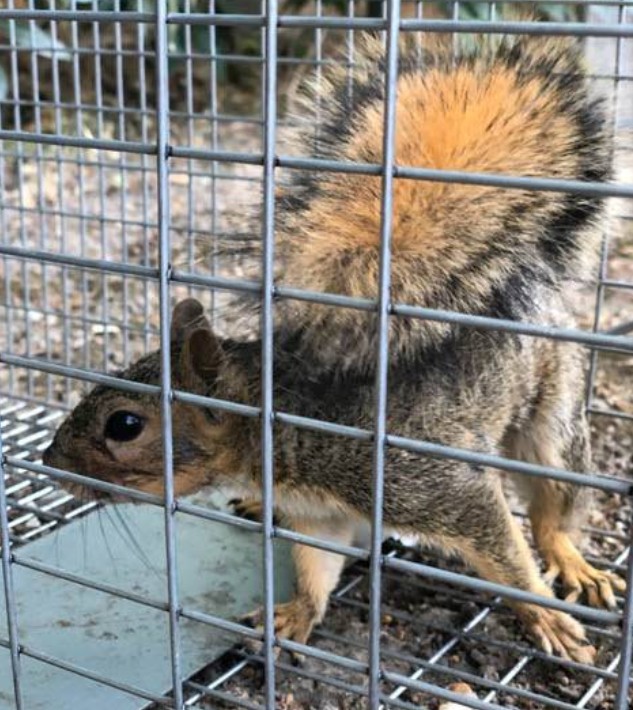
technician removing trapped squirrel from Albany home
Technician removing trapped squirrel from an Albany home

Attic Squirrel Removal in Albany, NY

The attic is where the large majority of squirrel infestations settle, and it requires a specific process to clear correctly.

Inspection — We map the attic for nest locations, active runs through the insulation, and the primary and secondary entry points squirrels are using.

One-Way Exclusion Doors — A one-way door installed over the main entry point allows squirrels to exit normally but prevents them from returning through the same opening. This is the most effective first step for active attic infestations, since it empties the space without the risk of trapping an animal inside.

Trapping and Removal — Where one-way doors aren't sufficient alone, or where additional entry points are being used, live trapping backs up the exclusion process.

Permanent Sealing — Once the attic is confirmed clear, all entry points are closed with materials squirrels can't chew through — galvanized hardware cloth, metal flashing, and properly fitted vent covers. Wood-only repairs are not sufficient; squirrels will re-chew them.

Attic Cleanup — Contaminated insulation is assessed, soiled material is removed, and the attic is treated to eliminate odor trails that attract the next squirrel to the same entry points.

Crawl Space Squirrel Removal in Albany, NY

Crawl spaces are a less common but real squirrel den site, particularly in older Albany homes where crawl space vents have deteriorated or were never properly screened. The removal process follows the same logic as attic work — inspection, exclusion or trapping, permanent sealing, and cleanup — but crawl space access and contamination cleanup carry their own set of considerations. If you're hearing movement low in the structure rather than overhead, the crawl space is worth inspecting as part of any squirrel assessment.

Cost of Squirrel Removal in Albany

The cost of squirrel removal depends on where the squirrels are nesting, how many entry points need to be closed, and how much cleanup or repair work the attic or crawl space requires afterward. A straightforward single entry point on a newer home is a different job than an older two-family with multiple soft spots in the roofline and an attic that needs insulation remediation. We inspect before quoting so the estimate reflects what's actually happening in the structure, not a flat rate that may over or under-account for the real scope.

Why Choose Albany Rodent Control for Squirrel Removal

Expert Removal

We treat squirrel problems as a structural issue as much as a wildlife issue — the entry point, the attic condition, and the roofline repair all matter as much as the trap placement.

Local Experience

We know Albany's housing stock: the aging two-families in Pine Hills, the brownstones in the Mansion District, the postwar ranches out toward Guilderland. Different eras of construction fail differently, and we inspect accordingly.

Licensed and Insured

All wildlife removal work is performed in compliance with New York State DEC Nuisance Wildlife Control Operator requirements. Ask any company you're considering for their license number.

Humane Removal

We use live traps and one-way exclusion devices as the primary approach, removing animals without unnecessary harm and with attention to whether young are present before any trapping begins.

Customer Satisfaction

We don't consider the job done at removal. The exclusion and cleanup work that follows determines whether the problem comes back, and that's where we focus as much attention as the initial removal.

Emergency Service

Available 24/7 for situations that can't wait — active animals in living spaces, confirmed wiring damage, or any scenario where delay increases risk.

Areas We Serve

We provide squirrel removal and rodent control throughout Albany and surrounding communities, including:

Center Square, Pine Hills, Mansion Historic District, Arbor Hill, Buckingham Pond, Helderberg, New Scotland Avenue corridor, Delaware Avenue, Washington Park area, West Hill, South End, and Eagle Hill.

Surrounding communities: Delmar, Guilderland, Colonie, Slingerlands, Loudonville, Latham, Cohoes, and Rensselaer.

Don't see your area? Get in touch — we likely cover your neighborhood.

Frequently Asked Questions

How do I know if the scratching in my attic is a squirrel and not a mouse or raccoon?

Timing is the most reliable first clue. Squirrels are active during the day, particularly around sunrise and again in late afternoon — so noise that starts at dawn and stops mid-morning is more likely a squirrel than a mouse (which tends to be active at night) or a raccoon (also nocturnal). Squirrel movement also tends to be rapid and purposeful, moving in short bursts, compared to the slower, more deliberate sounds a raccoon makes.

Can I just seal up the hole myself once the squirrel leaves to forage?

Sealing the entry point while a squirrel is out can work in theory, but it creates two serious problems in practice. First, if young are present in the nest, the mother will tear through almost any material to get back to them — often causing more roofline damage than the original entry. Second, wood-only repairs don't hold; squirrels will chew through them. Permanent sealing requires galvanized hardware cloth or metal flashing, and it should follow a confirmed inspection of the attic to make sure no animals remain inside.

Will squirrels leave on their own when the weather gets warmer?

Occasionally, but it's not something to count on. Once a squirrel has established a nest in a warm, predator-free attic space, it has little incentive to return to an exposed tree cavity — especially a female that has young to protect. Most squirrels that move into Albany attics in winter are still there in spring unless they're actively removed and the entry point is closed.

My Albany home is a two-family from the early 1900s. Why do we keep having squirrel problems every few years?

Older two-family homes are particularly vulnerable to repeat squirrel problems because aging wood soffits, original fascia boards, and historic rooflines often have more marginal openings than a modern structure, and repairs done without metal exclusion material can be re-chewed within a season or two. A thorough exclusion inspection — not just repairing the obvious hole — is usually what breaks the cycle for these properties.

Scroll to Top
Call Now: (518) 715 8776