
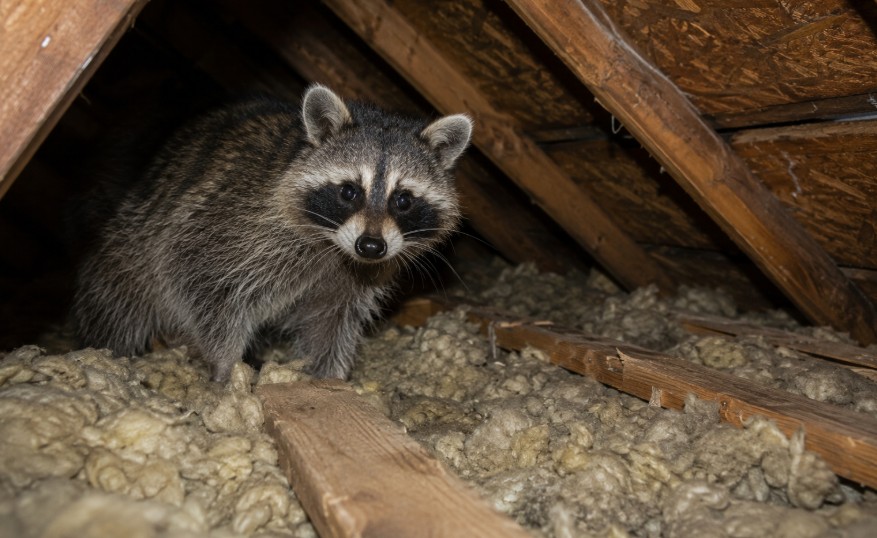
raccoon in Albany home attic
4.9 Star Rated

Raccoon Control &
Removal in Albany, NY

Raccoons can damage attics, roofs, and outdoor spaces while creating health and safety concerns. Our team provides safe, effective removal services and practical prevention solutions to help protect homes and businesses throughout Albany.

Live Answer 24/7
Always On Call
Licensed & Insured
Professional Assurance
30-60 Min Response
Rapid Response Time
Upfront Quote
No Hidden Fees

Raccoon Extermination and Wildlife Removal for Albany Homeowners

Heavy thumping in the attic above Center Square, scratching behind the chimney flue near Pine Hills, or a torn-open soffit on a two-family home out toward Delaware Avenue — these are the calls we get most often once the weather turns.

Raccoons don't dig into Albany lawns the way gophers and moles do; they climb in. We handle raccoon removal and exclusion across Albany, working everything from the 19th-century rowhouses closer to downtown to the postwar single-family homes further out toward the city's edges, since each housing era gives raccoons a different way in. If you're hearing movement overhead at night or finding a roofline that looks chewed open, we'll find the entry point, remove the raccoon, and seal the house back up properly.

Where Raccoons Den (and Why Albany's Older Homes Are a Target)

Opportunistic Nesters

Raccoons don't build nests from scratch the way squirrels do. They're opportunists — they look for an existing enclosed space that's warm, dry, and quiet, and move in. In the wild that's a hollow tree or rock crevice. In a city like Albany, it's almost always an attic, a chimney, the gap under a porch or deck, or a shed.

Vulnerable Architecture

Albany's housing stock plays a real role. Older rowhouses and two-families in neighborhoods like Center Square, the Mansion district, and Pine Hills tend to have aging soffits, fascia boards, and uncapped or loosely capped chimneys — exactly the kind of marginal openings raccoons exploit.

A raccoon only needs a gap roughly the size of a grapefruit to get in, and they're strong enough to tear rotted wood or pull back a loose shingle to make one. Once inside, a chimney functions almost exactly like the hollow tree a raccoon would use in the wild, which is part of why chimney denning is so common in Albany's older neighborhoods specifically.

Signs of Raccoons in Your House or Attic

  • Heavy thumping or rolling noises Overhead at night, much louder and heavier than the light scratching mice or squirrels make.
  • Scratching or chirping sounds Coming from the chimney flue, especially in late winter and spring when a female may be denning with young.
  • Damaged soffits, fascia, or roof vents Torn, chewed, or pried-open sections along the roofline.
  • A latrine site Raccoons designate one consistent spot for droppings, usually a concentrated pile rather than scattered like rodent droppings.
  • Visible entry holes Around chimney caps, roof edges, or gable vents, sometimes with claw marks or fur caught on the opening.

What's Included in Our Albany Raccoon Removal Process

Full exterior & attic inspection

We check the roofline, soffits, chimney, and crawlspaces to identify every active and potential entry point, not just the one being used right now.

Humane trapping & removal

Live traps are placed at confirmed entry and activity points, with extra care taken if young are present, since separating a mother from dependent kits creates a worse problem than the original infestation.

Exclusion

Once the attic or den site is confirmed clear, all entry points are sealed with heavy-gauge materials raccoons can't tear through, and a chimney cap is installed if one is missing.

Cleanup guidance

We walk you through what's needed for insulation replacement and latrine decontamination, since raccoon droppings carry health risks that DIY cleanup often misses.
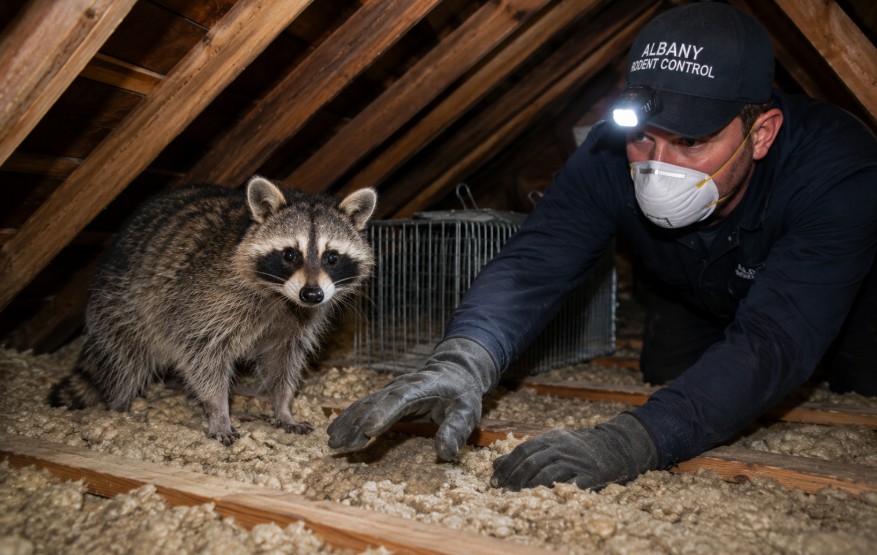
technician removing raccoon from attic in Albany ny

Methods & Tools for Raccoon Control and Removal

Entry point mapping

identifying every soft spot in the roofline, not just the obvious hole, since raccoons often have more than one access route.

One-way exclusion devices

installed over the main entry point so raccoons can leave but not re-enter, used to confirm a structure is empty before permanent sealing.

Live trapping

the standard method for confirmed removal, particularly when exclusion alone isn't enough.

Heavy-gauge exclusion

galvanized hardware cloth and metal flashing installed over soffits, vents, and chimney openings to permanently block re-entry.

Chimney capping

a properly fitted cap is one of the single most effective ways to prevent raccoon denning in a chimney.

Habitat & food source removal

securing trash, removing accessible pet food, and trimming branches that overhang the roofline to reduce what's drawing raccoons to the property in the first place.

A Note on New York State Raccoon Law

Raccoons are classified as a furbearing, rabies-vector species under New York's Environmental Conservation Law, which changes how removal is allowed to work. Relocating a trapped raccoon requires permission from the owner of the property where you intend to release it, and it's illegal to release an animal onto state land, in a park, or anywhere other than where it was legally permitted. In practice, this means trapped raccoons in Albany are either released on-site after exclusion work is complete, or handled according to state and county health department guidance — not driven out to the country and let go, which is a common misconception. Anyone removing raccoons for payment in New York is required to hold a DEC Nuisance Wildlife Control Operator license; always ask for a license number before hiring anyone for raccoon work.

Cost of Raccoon Removal in Albany

Pricing for raccoon removal depends on how the animal is accessing the structure, whether young are present, and how much exclusion work the roofline needs afterward. A single, easily reached entry point on a newer home is a more contained job than an older rowhouse with multiple marginal openings and an aging chimney. We provide a free estimate after the inspection, once entry points and any active denning are confirmed.

Why Choose Our Albany Rodent Removal Team

We don't just trap and leave — we seal the structure properly afterward, which is the step that actually prevents the same raccoon, or the next one, from coming back through the same opening. We're familiar with the specific vulnerabilities of Albany's older rowhouses and two-family homes, and we handle removal in line with New York DEC regulations rather than cutting corners on relocation rules that carry real penalties.

  • 24/7 availability for active denning situations
  • Free estimates before any work begins
  • A service guarantee on completed removal and exclusion work
Serving Albany Neighborhoods and Surrounding Areas

We provide raccoon removal and wildlife control throughout Albany, including:

Center Square, Mansion District, Pine Hills, Arbor Hill, Washington Park area, South End, Delaware Avenue, New Scotland Avenue corridor, and West Hill.

We also serve nearby communities including:

Delmar, Guilderland, Colonie, Slingerlands, Loudonville, Latham, and Rensselaer.

Don't see your neighborhood listed? Reach out — we likely still cover your area.

FAQs
Why do raccoons keep going for my chimney specifically?

A chimney offers the same warmth, darkness, and protection as a hollow tree, which is a raccoon's natural den site, so it reads as ideal shelter, especially to a pregnant female looking for a safe place to give birth in late winter. An uncapped or loosely fitted chimney cap is one of the most common entry points we find on older Albany homes.

Is it legal for me to trap a raccoon myself and just drive it somewhere else?

Not without restrictions. New York law allows property owners to trap a raccoon causing damage on their own property, but you can't release it more than a short distance from where it was caught without the release-site landowner's permission, and you can't release it in a park, on state land, or other protected property. Most homeowners are better served calling a licensed Nuisance Wildlife Control Operator to handle this correctly.

I hear noise in the attic only at night — does that confirm it's a raccoon and not a squirrel?

It's a strong indicator. Raccoons are nocturnal and tend to produce heavier thumping or walking sounds given their size, while squirrels are typically active during the day and make lighter scratching noises. That said, the only way to confirm what's actually in the attic is a direct inspection, since timing alone isn't a guarantee.

What happens to baby raccoons if the mother is removed from my attic?

If kits are separated from their mother before they're mobile, they won't survive on their own, which is exactly why timing and method matter so much in spring removal jobs. A proper inspection identifies whether young are present before any trapping happens, and removal is planned around keeping the family together until the kits can leave with her.

Will sealing up the hole I can see stop the problem for good?

Only if it's the only entry point, and it often isn't. Raccoons frequently test multiple soft spots along a roofline before settling on one, so a thorough inspection of soffits, vents, and the chimney is necessary before sealing anything — closing one hole while another stays open just shifts where the animal gets back in.

Scroll to Top
Call Now: (518) 715 8776