

Attic Rodent Removal Albany, NY
Scratching above the ceiling at night? We find how the mice or squirrels got in, remove them, clean up what they left behind and seal the house so they stay out.
It usually starts the same way. The house goes quiet around eleven and something small starts moving above the bedroom ceiling. Or it is six in the morning and something that sounds far too big to be a mouse is rolling an acorn across the attic floor.
You are not imagining it, and it does not mean your house is dirty. It means your house is in Albany: old, tall, close to mature trees, and heated from October to April in a city where an average January night drops to about 16°F.
We are Albany Rodent Control, a local company based on State Street. We work in attics from Center Square and Pine Hills out to Delmar, Loudonville, Guilderland and Colonie. This page covers what is probably up there, how it got in, what it is doing to your insulation and wiring, and how we get it out and keep it out.

How we work, in one line: a full rodent inspection, trapping, exclusion at every entry point, then cleanup and sanitation of the attic itself.
How to Identify Rodents in Albany Home Attics
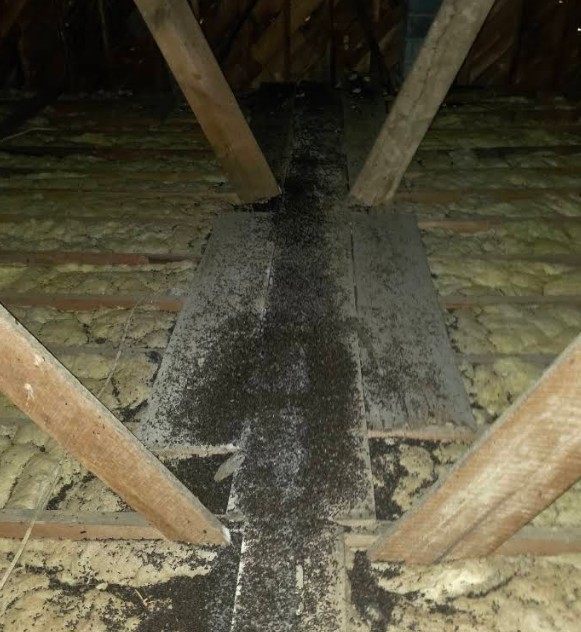
Most people find out late. Rodents move at night, stay inside the insulation and the wall cavities, and can be up there for weeks before anyone opens the hatch. These are the signs worth checking for.
rodent sound from attic
Two checks take a minute and tell you a lot. Turn the attic light off on a bright day and look for daylight at the eaves and around the vents. After a snowfall, look at your roof from the street. Bare patches while the neighbors' roofs are still white mean heat is leaking through thin or damaged insulation, and tunneling by rodents is one of the causes we check for.
Which Animal Is in Your Attic?
Five animals account for nearly every attic rodent call in the Capital Region, and they do not respond to the same fix. Knowing which one you have decides the trap, the timing and where we seal.
| Animal | When you hear it | What it sounds like | What it leaves | Usual way in |
|---|---|---|---|---|
| House mouse | Night, mostly the first hours after the house goes quiet | Light scratching and pattering, often in a wall before the attic | Rice-grain droppings with pointed ends, scattered along edges | A quarter-inch gap at the sill or porch, then up inside the wall |
| White-footed mouse and deer mouse | Night, starting with the first cold snap in October | The same light scurrying, sometimes seeds being moved | Similar droppings, plus caches of acorns and seeds in the insulation | Roofline, vents and foundation on houses near woods |
| Eastern gray squirrel | Daytime, heaviest just after sunrise and before dusk | Fast, heavy running, rolling nuts, chewing on wood | Larger rounded pellets near the nest, chewed wood, leaf and insulation nests | Chewed fascia, soffit corners, roof vents, uncapped chimneys |
| Flying squirrel | Night, from dusk into the small hours | Many light feet at once, soft thumps | Small pellets concentrated in one latrine spot, which can stain the ceiling below | Small gaps high on the roofline, at dormers and ridge and gable vents |
| Norway rat | Night | Slower, heavier movement and loud gnawing | Blunt capsule droppings about three-quarters of an inch long | Climbs from the cellar through wall voids and pipe chases |
Roof rats are not an Albany problem. You will see them listed on plenty of pest control sites, but they are not established in upstate New York. A rat in an Albany attic is a Norway rat that climbed, and it almost always means a larger problem at cellar level.
Flying squirrels surprise people. New York has two species. They weigh about two ounces and are rarely seen because they are active at night. They den in groups through the winter, so it is seldom just one.
Not everything overhead is a rodent. Slow, heavy footsteps and chattering usually mean a raccoon, which is a different job covered on our attic raccoon removal page. Squeaking at dusk with droppings that crumble into shiny insect fragments means bats. Bat work in New York is regulated by the DEC and timed around the summer pup season, and we will tell you plainly if that is what you have.
Squirrels come with rules. Gray squirrels are a protected game species in New York. Anyone who removes wildlife for a fee needs a Nuisance Wildlife Control Operator license from the state Department of Environmental Conservation. Ask any company for its license before it sets a squirrel trap.
How Rodents Get Into Albany Attics
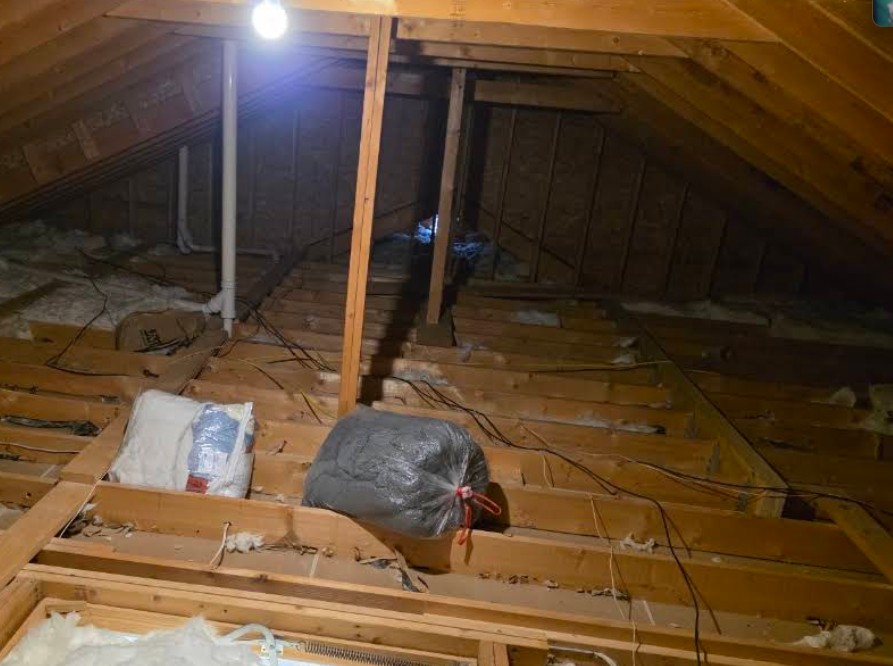
Mice do not start in the attic. They start at ground level and climb. A mouse needs a gap about the width of a pencil, a quarter of an inch, and Albany's older houses give it a clear run from the sill to the rafters. Squirrels do the opposite: they arrive from the trees and go to work on the roofline.
Where we look first depends on what kind of house you have.
Most of these have no walk-up attic. There is a shallow roof cavity above the top-floor ceiling, reached through a scuttle hatch, and it can run past the party wall into the house next door. Entry is usually at the cornice, around the roof hatch, at the chimneys, and along the party wall itself.
The noise above your bedroom may have come in three doors down, so we treat the row as one roofline. Many of these blocks are in local historic districts, where exterior work can need a Certificate of Appropriateness from the city. Minor repairs are typically reviewed by planning staff, and we tell you up front if something needs sign-off.
These are the classic Albany walk-up attics: a full stair, a plank floor, and decades of stored boxes. Most were balloon-framed, which means the wall cavities run open from the cellar sill to the attic floor. A mouse that gets in under the porch can be in the attic the same night.
At the roof we look hardest at deep wooden eaves, built-in gutters that have rotted from the inside, gable louvers with no screen behind them, and the gap where slate or old shingles meet the fascia. Street trees do the rest. A maple limb within a few feet of the roof is a squirrel bridge.
Capes hide their attics. The real space is the triangular void behind the upstairs knee walls, reached through a small door at the back of a closet, and it is easy to miss an infestation there for a full winter. Ranches have a low trussed attic over the whole house, usually with loose-fill insulation that shows every runway.
Common entry points are the corner where a dormer or garage roof meets the main roof, aluminum soffit panels that have dropped, gable vents, and the attached garage.
Newer houses are tighter at the foundation and weaker at the roof. There is often a gap between the roof decking and the fascia board, hidden behind the gutter, and vinyl soffit and plastic ridge vents are easy to chew or push through. Houses that back onto woods get white-footed mice and flying squirrels every fall.
In townhouses the attic is divided by fire walls that are not always complete. One unit's problem can become the whole building's.
The Albany Attic Calendar
Attic problems here follow the weather closely enough to plan around. This is what moves in, and when.
| When | What is happening | What to do |
|---|---|---|
| Late August to September | Nights cool and mice start testing the house. Nothing has moved in yet. | The best weeks of the year to seal. |
| October | First frost usually arrives by mid-month. House mice and white-footed mice move indoors within days. | First scratching means a small population. Call early. |
| November to December | First measurable snow comes around mid-November. Mice are settled and breeding, and flying squirrels group up in attics. | Trapping and sealing together. |
| January to March | Deep cold, in a city that averages about 59 inches of snow a season. Female gray squirrels look for a den and have a first litter in late winter. | Check for young before any squirrel entry is closed. Watch roof melt patterns after snow. |
| April to May | Thaw. Mouse populations that wintered indoors are at their largest, and raccoon mothers also choose attics in spring. | Removal plus cleanup. A good time to assess the insulation. |
| June to August | Attics are hot and outdoor food is plentiful, so new pressure drops. Gray squirrels have a second litter in midsummer. | The quietest time for exclusion and insulation work. |
Some autumns are worse than others, and the oaks are part of the reason. Researchers at the Cary Institute of Ecosystem Studies in Millbrook have tracked it in the Hudson Valley for decades: a heavy acorn year is followed by a boom in white-footed mice the next summer. More mice in the woods in summer means more mice looking for a warm attic in October, especially along the Pine Bush, the Normanskill and the wooded edges of Delmar and Guilderland.
Risks of Rodents in the Attic
An attic is out of sight, which is why the damage gets expensive before anyone looks. These are the five problems we see, roughly in order of seriousness.
Droppings, urine and nesting material dry out and break down into dust. Bath fans, recessed lights and the attic hatch all leak a little air between the attic and the rooms below. Breathing contaminated dust is the main way rodent-borne disease reaches people, which is why the CDC says never to sweep or vacuum droppings dry.
Hantavirus is rare in New York, with only a handful of confirmed cases. The mice that carry it here are white-footed and deer mice, and state health officials advise treating any mouse droppings as if they could carry it. White-footed mice are also the main host that infects ticks with Lyme disease in our region, and animals nesting in an attic bring their fleas, mites and ticks with them.
Rodents gnaw constantly because their front teeth never stop growing, and wire sheathing is a convenient thing to gnaw. In a newer attic that means nicked cable. In a pre-1940 Albany attic it can mean knob-and-tube wiring whose cloth covering is already brittle. We photograph any chewed wiring we find and recommend a licensed electrician sees it before the attic is re-insulated.
Mice tunnel through insulation and flatten it into runways. Squirrels pull it out in armfuls for nests. Either way it stops working. ENERGY STAR recommends R-49 to R-60 in attics in our climate zone, and many older houses start well below that.
You see the result on the roof. Heat leaking into the attic melts snow from below, the meltwater refreezes at the cold eave, and you get ice dams and water backing up behind the gutters.
Squirrels chew fascia, rafter tails and vent louvers to widen their way in, and every hole they open lets in water. A long-running colony soaks one area with urine until it stains the ceiling below. Ductwork, bath-fan hoses and anything stored in cardboard are all fair game.
A female house mouse can have five to ten litters a year, usually five or six young each, and those young breed at about six weeks old. A pair in October is a population by February. Rodents rarely leave a warm attic on their own.
What to Do Tonight If You Hear Something in the Attic
You do not need to do anything drastic before we get there. A few simple things help, and a few common reactions make the job harder.
Attic Rodent Inspections for Albany Homes
Every job starts with an inspection, and an attic inspection is never only the attic. Mice in the rafters got there from the cellar, so we work the house from the sill plate up and from the roofline down.
Outside, we work through the roofline checklist above, on a ladder where the ground view is not enough. Albany's snow, ice and freeze-thaw cycles open new gaps every winter, so last year's sealed house is not automatically this year's.
You get photos of what we found, the species we believe it is and why, and a written scope: what we will trap, what we will seal and with what material, and what the attic needs afterward.
Our Albany Attic Rodent Removal Process

For mice and rats, trapping is our default in an attic. Traps go where the animals already travel: along the top plates at the eaves, beside the rafters, at the head of the wall cavities and next to the hatch. We check them on a schedule, remove what is caught and keep a count, so you can see the numbers fall.
Squirrels are handled differently. A one-way door goes over the main entry so they can leave and not return, with cage traps as backup. In late winter and midsummer we check for young before any squirrel entry is closed.
We do not bait attics. A rodent that eats poison dies where it hides, and in an attic that means under the insulation or inside a wall. We also remove any dead animals we find, because the smell and the flies do not stay in the attic.
Trapping without sealing only empties the attic for a while. The scent trails stay, and the next animals follow them in. Exclusion is the part that ends the problem.
We close the secondary gaps first, trap what is inside, and close the main entry last, once the attic has gone quiet. Materials are chosen for teeth, not looks: quarter-inch hardware cloth, sheet metal and flashing, copper mesh packed behind sealant, and mortar. Expanding foam on its own is not exclusion. Mice chew straight through it.
Typical attic exclusion work on an Albany house:
The removal stage is finished when the attic is quiet, the traps stay empty and no fresh droppings appear on cleaned surfaces. Only then do we move on to cleanup. Cleaning an attic that still has an open entry point is money spent twice.